October had a lot more than Diwali this year.
Navratri, Dussehra, Durga Puja and early Diwali stocking all came together within the month. For India’s FMCG market, that meant a more concentrated festive period, with more occasions driving shopping, stocking and retail activity.
Last year, the festive calendar was spread differently. While Diwali and Dussehra both fell in October, an early Dussehra meant festive placements were split between September and October.
This year, the market had a fuller festive calendar within October. And the numbers tell an interesting story.
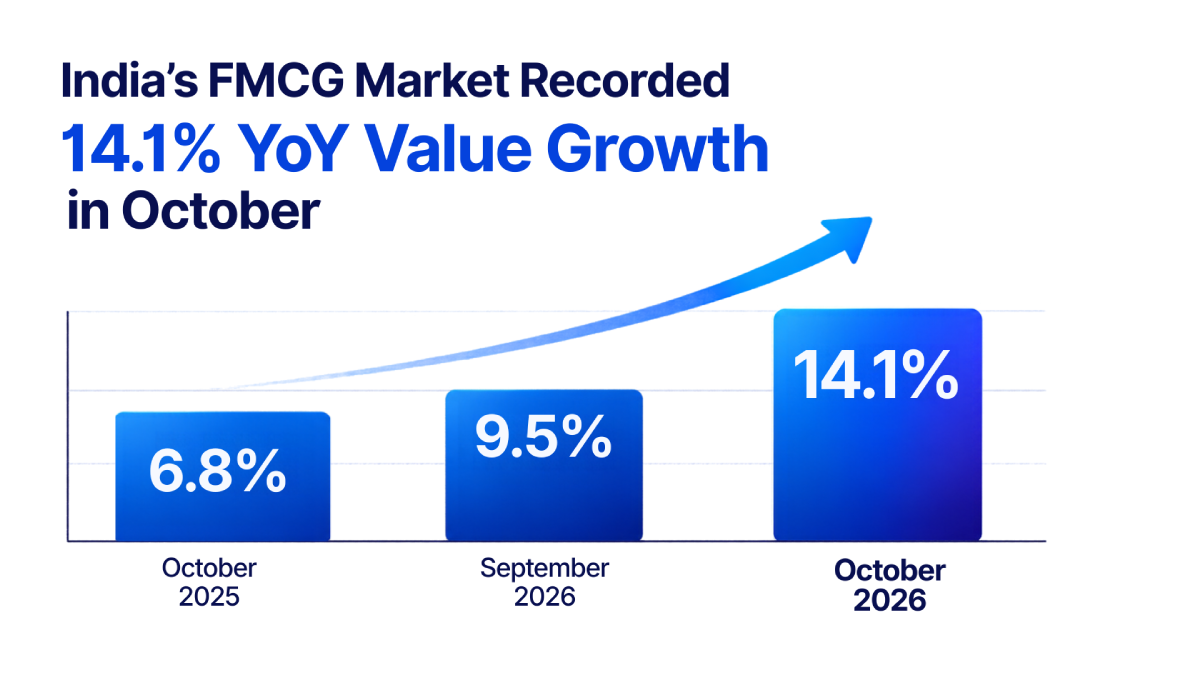
India’s FMCG market recorded 14.1% YoY value growth in October, up from 9.5% in September 2026 and 6.8% in October last year.
But the festive calendar wasn’t the only thing changing.
More festivals. More outlets. Better market coverage.
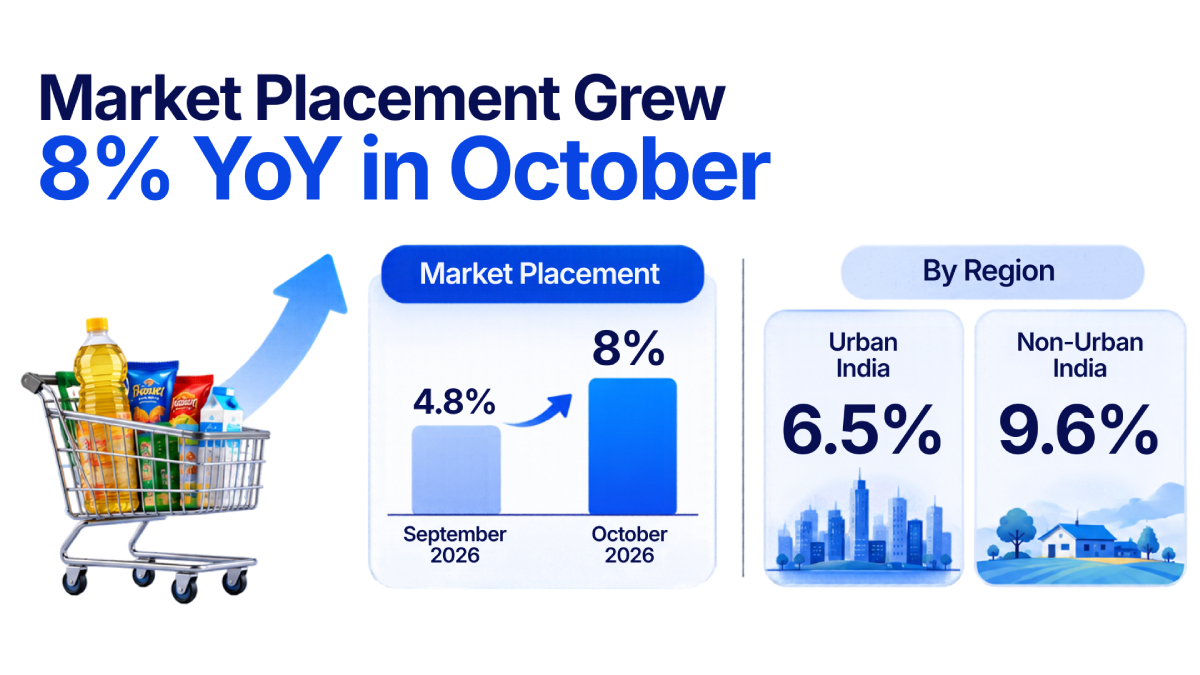
Festive demand creates an opportunity, but reaching consumers requires products to be available where they shop. October saw a clear improvement here. Market placement grew 8% year-on-year, compared with 4.8% in September. The improvement was stronger in Non-Urban India at 9.6%, compared with 6.5% in Urban markets.
More outlets were being catered to by field sales teams, particularly in Non-Urban markets. So, alongside a stronger festive calendar, brands were also reaching a wider retail network.
Was it just higher prices, or were consumers buying more?
Bizom’s October data points to continued price hikes across FMCG categories, averaging around 8–9%.
But the pricing story was not uniform.
In Commodities, edible oil prices increased, while spices saw almost no price movement. Packaged Foods and Dairy, including milk and value-added dairy products, saw price increases of around 10–15%, varying across categories.
At the same time, there are signs of a genuine volume recovery after a few relatively slow months. This makes October’s performance interesting: the market appears to be seeing support from both pricing and improving consumption.
Non-Urban India takes a bigger share of the festive story
The momentum was not limited to India’s larger cities.
Urban India recorded 10.1% value growth in October, while Non-Urban markets grew 16.1%. The gap between the two widened to 6 percentage points, compared with 2.1 percentage points in September.
The difference was particularly visible in Beverages, Commodities and Home Care, where Non-Urban markets recorded 19.2%, 20.4% and 18.8% growth, respectively.
But Urban markets had their own standout. Packaged Foods grew 19.3% in Urban India, ahead of 16.5% in Non-Urban markets.
One festive window. Two very different occasions.
There is another interesting way to look at October’s performance.
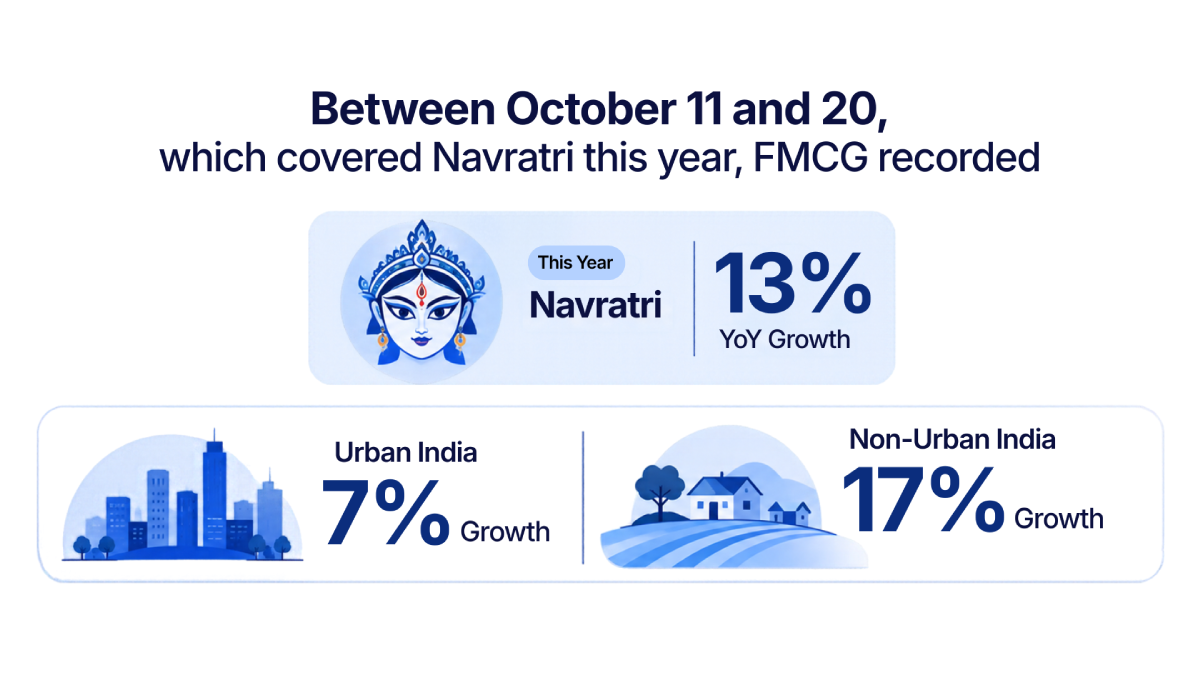
Between October 11 and 20, which covered Navratri this year, FMCG recorded 13% YoY value growth.
Interestingly, the same period coincided with Diwali last year.
Non-Urban India grew 17% during these ten days, while Urban India recorded 7%.
The comparison offers an interesting perspective on how festive demand is playing out across India’s retail markets, even when the occasions driving that demand differ.
October delivered. Now, over to November.
A more concentrated festive calendar, better outlet coverage, continued pricing support and signs of improving consumption all came together in October.
The result was a sharp acceleration in India’s FMCG value growth.
What November brings remains to be seen. But October’s numbers already have plenty to tell us, from the categories that gained momentum to the markets that led the growth.
Want to explore the complete October story?
Reply “KIRANA” to be the first to access The Kirana Pulse report when it goes live.