

Death of Kirana Stores – A Funeral or Fake News
by Sam Richardson
March 20 2025 | 08 min read
Share:
$220 Billion that’s the projected growth of Indian FMCG Market in 2025. That sounds like an opportunity that we all are excited to take a slice of. But beneath the layers of the robust FMCG market, there are some significant undercurrent changes that most of us might have missed. It is very important for us to understand this phenomenon in detail to ensure that the opportunities are taken advantage of.
Kiranas and Quick commerce have been the talk of the town for the past few quarters. There have been many articles on the news on how quick commerce is killing the kirana stores. These platforms, promising delivery of groceries and essentials within minutes, have profoundly altered consumer behavior in metropolitan areas. But has it led to the so-called “death” of Kirana stores?
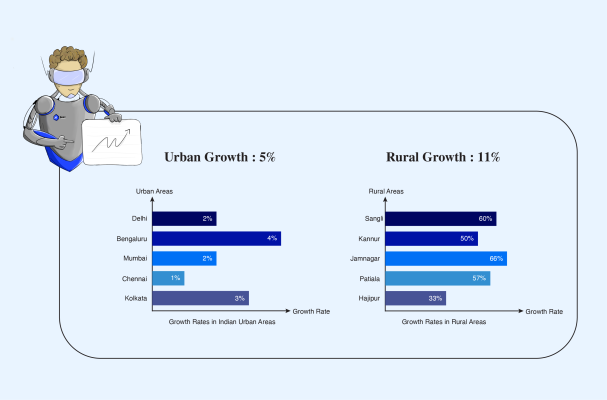
Before we find that out, let’s have an update on the growth of FMCG in both Urban and Rural markets.
RIO Quick Analysis of Growth
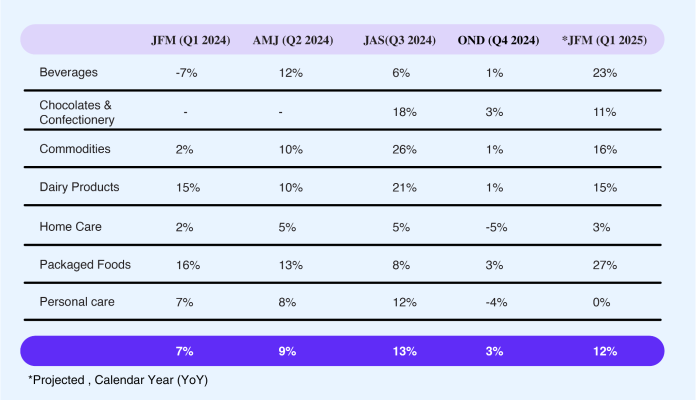
Here is the category growth trend in comparison to the same quarter of the previous year.
"Rural Market's growth has more than doubled in comparison to its urban counterpart and this growth trend has been observed consistently over recent quarters, underscoring the pivotal role of rural markets in driving overall FMCG growth. Kirana stores remail the dominant retail channel in rural India, commanding a substantial share of FMCG brand sales"
- RIO
Is the Kirana store really dead?
Bizom’s research and data indicate a substantial impact on traditional kirana stores, with retailers in urban centers experiencing a decline in sales due to the rise of quick commerce and modern trade outlets. A large percentage of consumers have reduced their spending at kirana shops, opting for the convenience offered by these swift delivery services .This shift is so pronounced that the projections estimate a considerable decline in the market share of traditional kirana stores in the coming years in the urban markets.
Stand Alone Modern Trade had grown by 13% in metros. Our data shows kirana store closures across India, a substantial portion of these shutdowns have occurred in metropolitan areas, this in turn highlights the intense pressure these stores are facing.
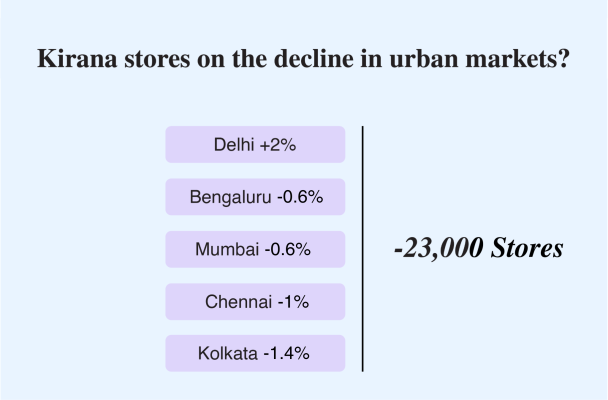
Nearly 23,000 kirana stores have shut down in the metro cities of India, but is this trend cementing the end of our favourite kirana shops in our neighbourhood?
Well, Our data says ‘NO’
Kirana store says “I am still in the game”
In contrast to the challenges faced by their urban counterparts, kirana stores in rural markets exhibit remarkable resilience and growth by adding nearly 2,67,000 kirana stores. The concept of kirana stores still resonates with the consumers but in a market that was once considered to be slow.
This shows that they have discovered a new neighbourhood that is welcoming them with opportunity and growth – The Semi-urban and Rural Markets.
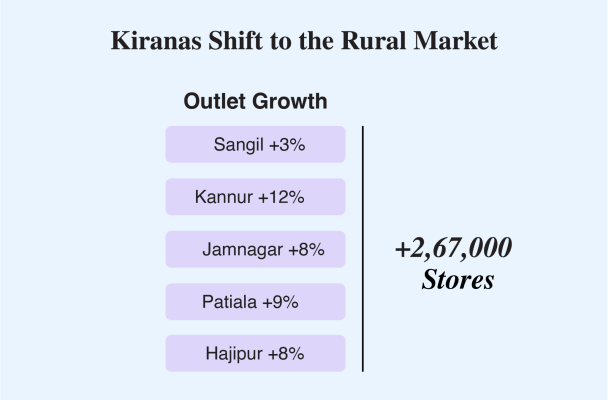
Hence, it is unfair to call it the “Death” but an “Evolution” of the kirana stores. Though there are many reasons why the rural market provides a ground for this growth. It is undeniable that the enduring strength of kirana stores lies in the trust and personal relationships they cultivate with their customers. In many rural communities, the kirana store owner is a known and trusted figure, fostering strong customer loyalty. This personal connection, coupled with the convenience of proximity and often the flexibility of credit, provides a significant advantage over impersonal modern retail or online platforms in urban settings.
Is Bharat becoming more aspirational?
Yes, the consumption in Tumkur has grown 2.5x in comparison to Bangalore and we have seen a promising growth trajectory that validates the opportunity of $220 Billion in 2025 for the FMCG market. The consumption growth in other smaller cities like Tiruppur, Solapur, and Coimbatore are proving that India’s next big consumption wave isn’t trickling down from the metros. The semi-urban and rural markets have also shown some interesting patterns in buying preferences of consumers in different segments.
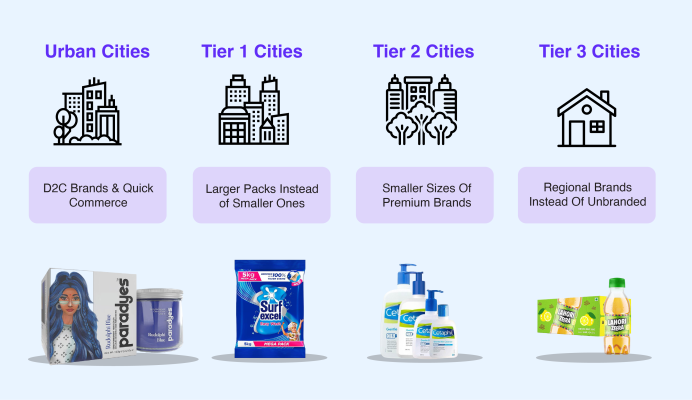
The semi-urban and rural parts of India are moving toward branded consumption where smaller size packs of premium brands and regional brands over unbranded products show signs of robust demand. This is also validated by a report in the economic times which shows desi regional brands are out-pacing sales growth when compared to national brands.
What does this imply to your brand’s strategy?
The contrasting fortunes of urban and rural kirana stores necessitate a re-evaluation of distribution strategies for FMCG brands. In urban areas, the significant impact of quick commerce cannot be ignored.
While, the robust growth in rural markets presents a significant opportunity that FMCG brands must actively pursue. Tailoring product offerings to meet the specific needs and price sensitivities of rural consumers, strengthening distribution networks to ensure last-mile reach, and developing targeted marketing campaigns are crucial for capitalising on this growth potential.
At Bizom these granular insights, real-time visibility into retail execution and store performance is powered by our vast network of distributors, on-ground sales force and retail stores that help us understand the pulse of the market. This provides invaluable ground realities for FMCG brands. We have built our solutions to relay these real-time ground realities into the hands of on-ground executives and help them by suggesting nudges to upsell or cross-sell based on the stores and local market performance and also ease all their day-to-day tasks in the market to increase efficiency. We call this “Real Intelligence (RI)”, the perfect blend of AI and human intuition.
With the extensive data directly from the ground and knowledge of the market mixed with our AI forecasting capabilities our RI solutions can help predict the changes in consumer behaviour even before you notice the shift happening.