
Kirana Pulse | April 2025 – What’s Cooling, What’s Flying, and Who’s Buying

by Mehak Jaggi

May 22 2025 | 08 min read

Share:

Dear Reader,

It’s RIO here, your Real Intelligence Officer, and as always, I’ve been watching your shelves closely. April 2025 turned out to be a month of subtle shifts and sharp surprises—some expected, some not. From the quiet rise of non-urban stores to a fierce return of summer essentials and some worrying drops in indulgence categories, the Kirana universe was anything but predictable.

Let’s unpack the big takeaways from this month’s Pulse.

🏙️ Urban Bounces Back, But Rural Keeps the Pulse Beating

After a tepid March, April brought fresh energy to FMCG markets. Urban India surged ahead with a 9.6% YoY growth, up from 7.5% the previous month—likely spurred by recovering consumer sentiment, relaxed interest rates, and stronger spending patterns. Rural India, meanwhile, wasn’t far behind, with 8.9% YoY growth, though slightly below March levels.

Interestingly, Kirana stores in cities didn’t grow, but those outside cities increased by almost 5%. This shows that even though cities get more attention, it’s the smaller towns and villages that are really driving growth.

📦 Rise of the Small Pack: Smarter, Not Smaller

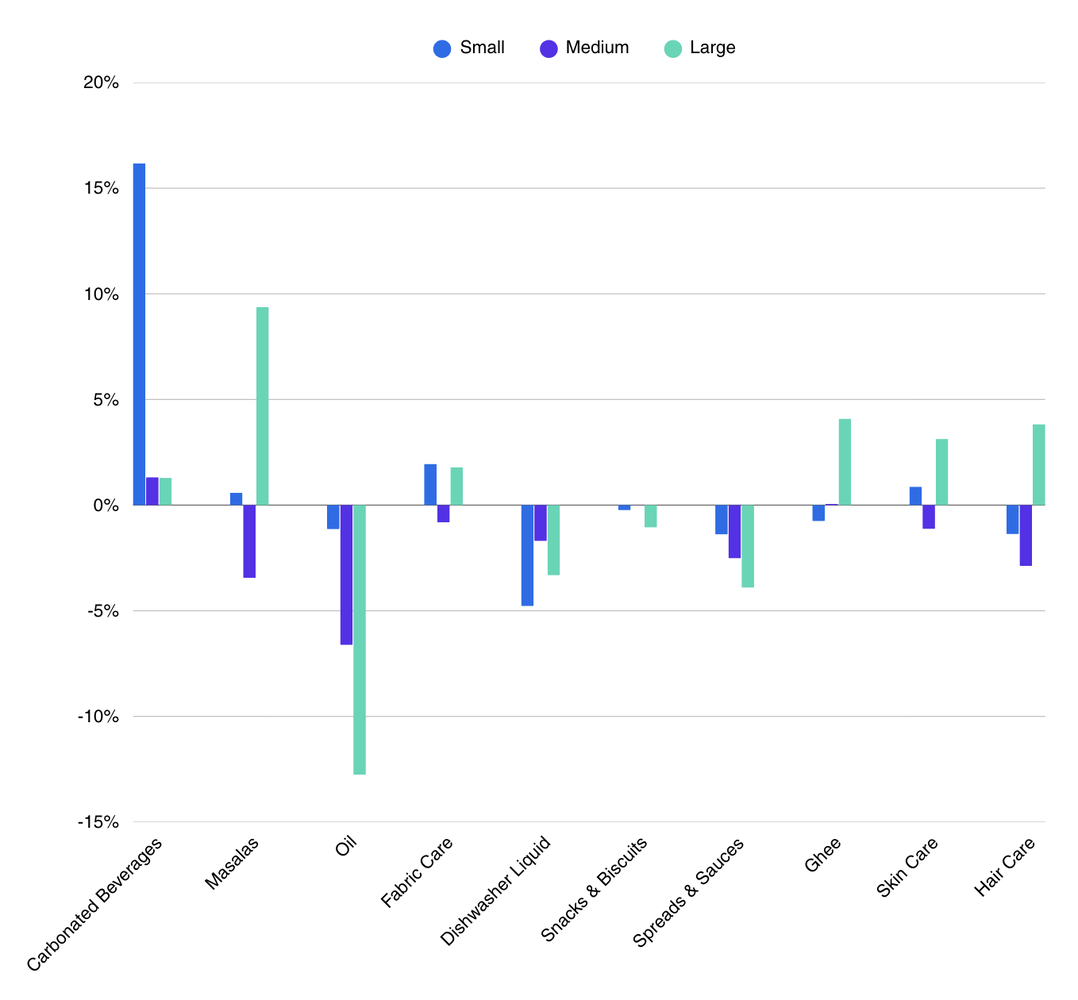
A standout theme this April was the sharp tilt toward smaller SKUs, particularly in packaged foods and personal care. Whether it’s affordability, inflation fatigue, or smart shelf management, Kirana retailers are now favoring compact units that move fast.

The shift was most prominent in beverages, where ₹10 packs clocked the highest trade spends. Even in snacks, biscuits, and condiments, small packs led both distribution width and depth. Brands are clearly aligning trade investments toward value-sized offerings that meet price-sensitive demand, especially in non-urban markets. Larger packs, particularly in oils and masalas, saw trimmed trade spends—a clear cue for rethinking portfolio priorities.

📊 The Growth Leaders: Commodities, Dairy & Beverages

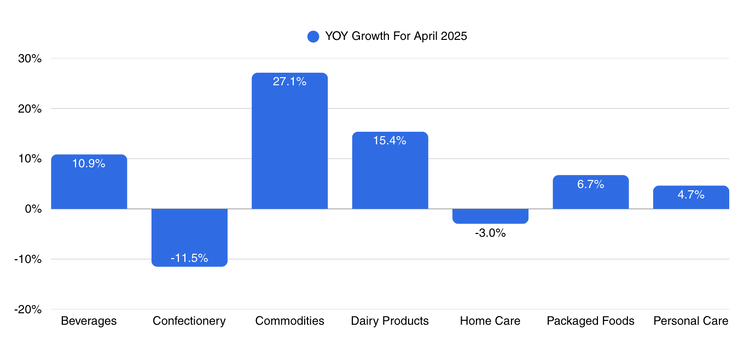
April was an excellent month for essential and seasonal categories. Topping the charts was Commodities, with a massive 27.1% YoY growth—driven primarily by edible oil. The segment saw a 17% increase in Kirana footprint, especially across rural belts in the West and East.

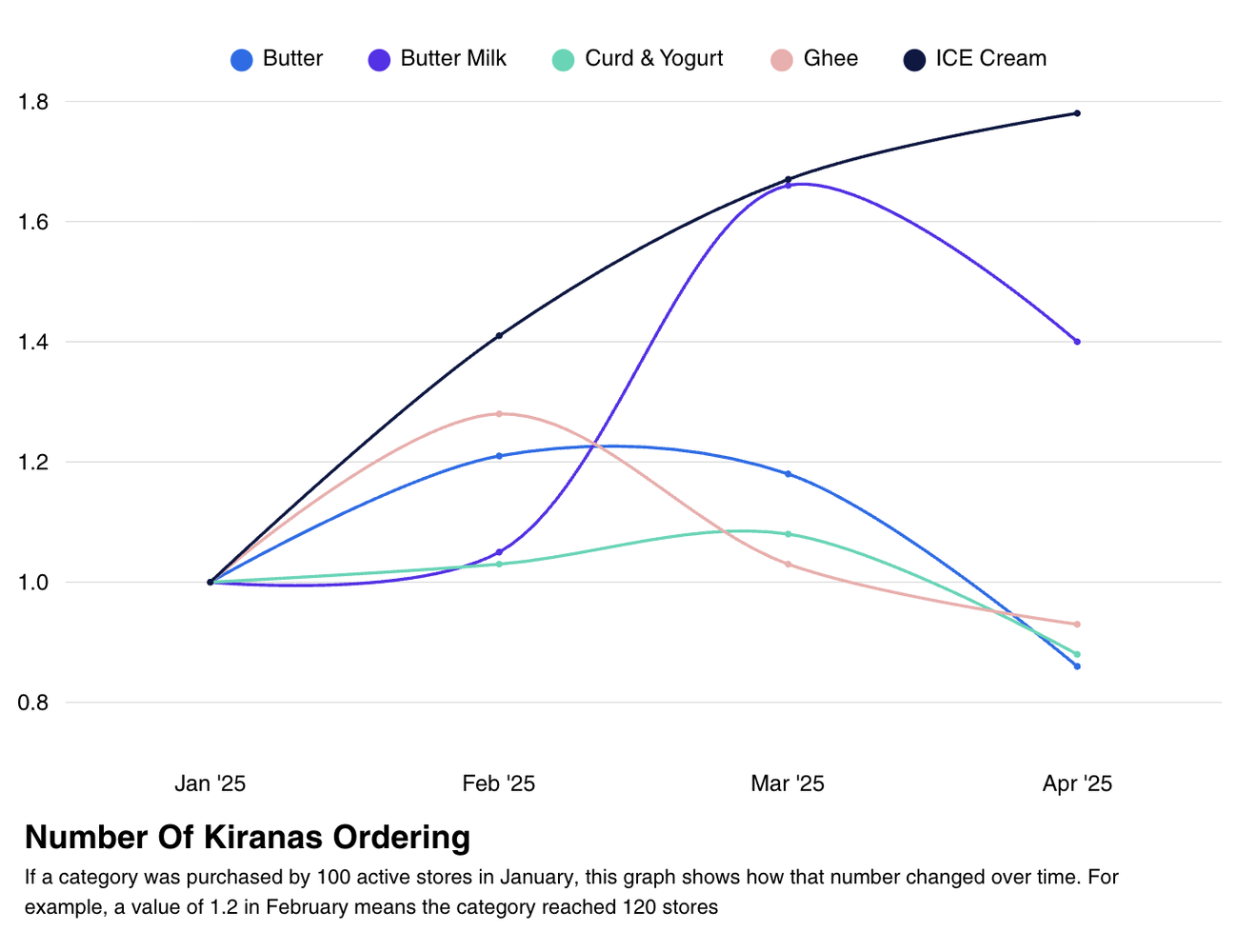
Dairy Products weren’t far behind, growing 15.4% YoY, powered by ice cream and buttermilk, which surged in Northern India as temperatures soared. Packaged Food clocked a 6.8% rise, led by frozen vegetables and savory snacks. Interestingly, this growth came not from expansion, but from higher throughput per store, revealing a demand surge in existing channels.

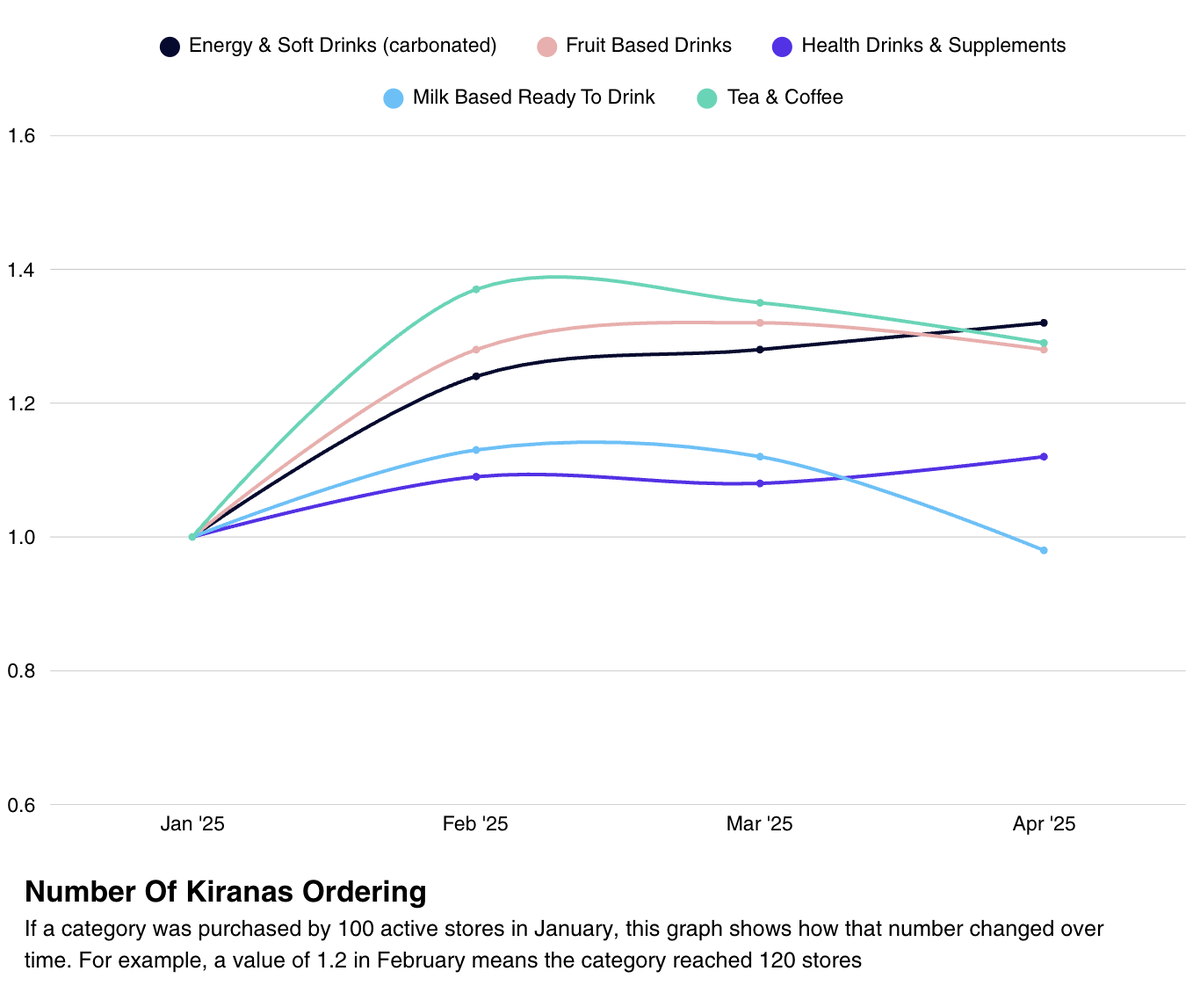
Beverages posted a 10.9% jump, with fruit-based drinks leading, followed by carbonated beverages and tea/coffee. Growth was strongest in rural North and West, while East and South lagged due to cooler, unseasonal weather patterns. The category added 8% more Kirana outlets, mostly in under-penetrated rural clusters.

🍫 Trouble in Indulgence: Chocolates Slide Further

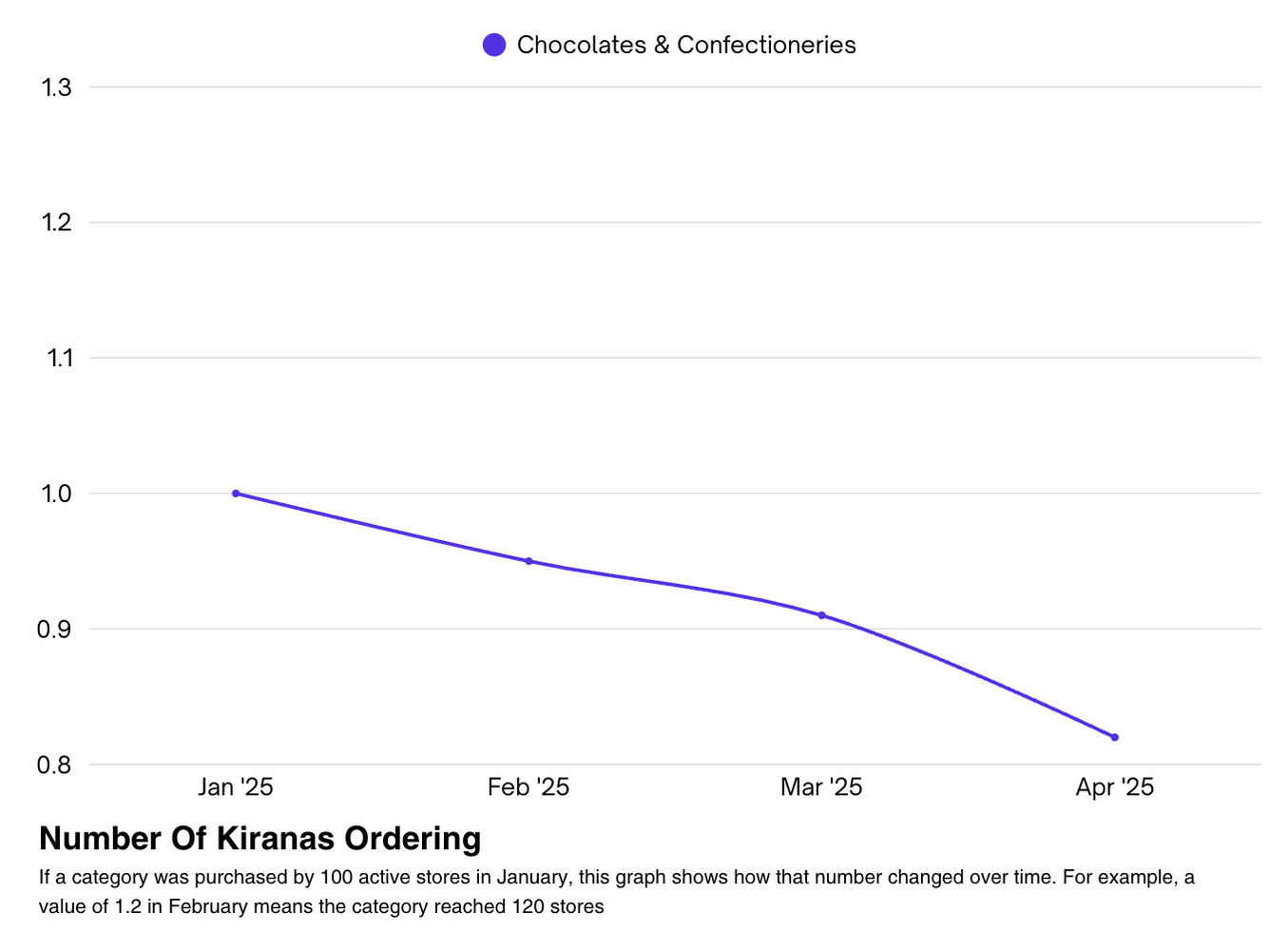
Not all categories enjoyed the sun. Chocolates and Confectionery took a beating with a -11.5% YoY degrowth, continuing its downward slide since February. Large and premium packs were hit the hardest, especially in urban South India.

The real concern? A shrinking outlet footprint, particularly in non-urban zones, shows that Kiranas are deprioritizing indulgent, slow-moving inventory. For brands in this space, smaller SKUs, bundling strategies, or festival-focused promotions might be the way forward.

🧴 Personal and Home Care: Mixed Signals

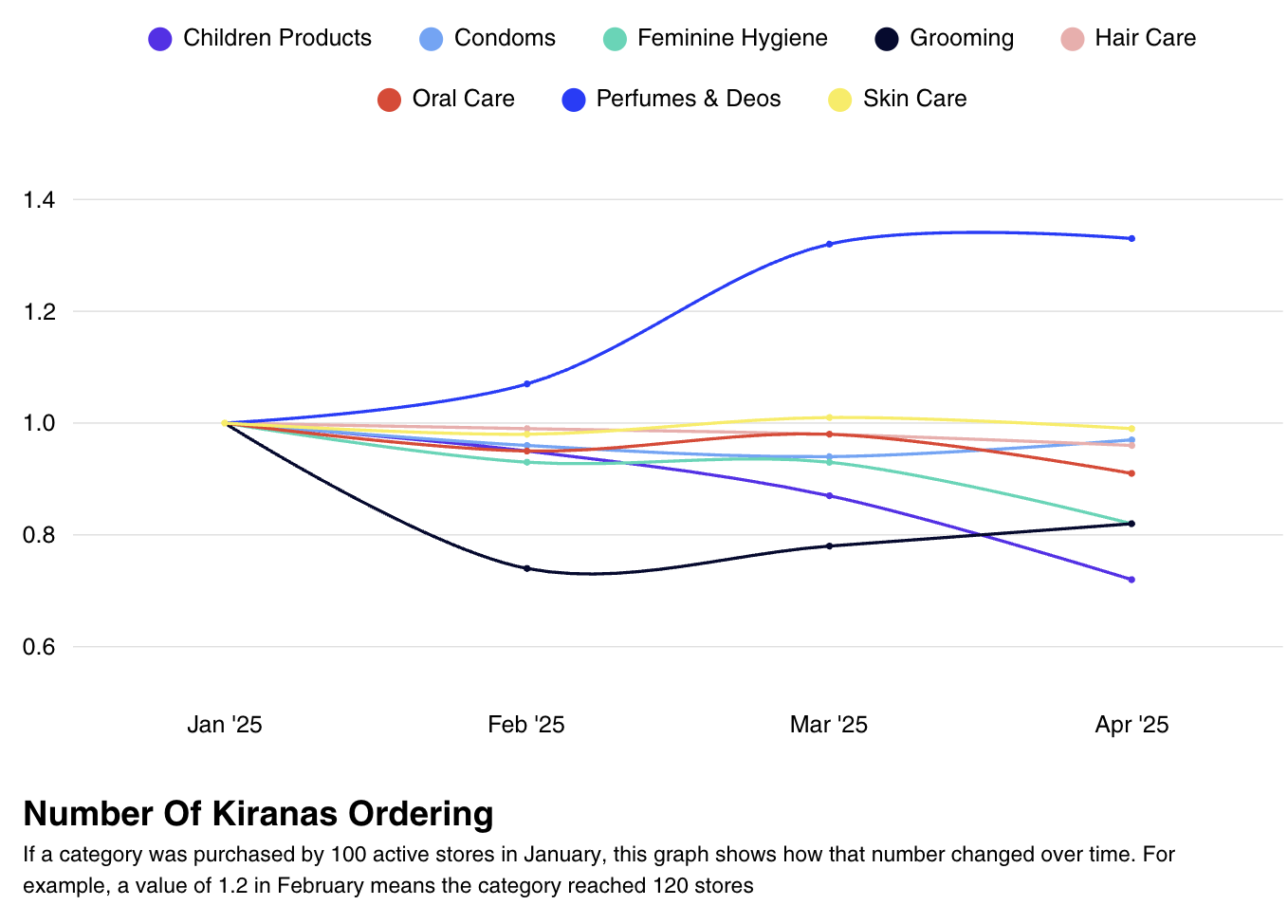
Personal Care had a decent run this April, up 4.7% YoY, led by Perfumes and Deodorants—clear favorites in warmer climates. Southern India drove much of the growth, and urban outlets saw a better pickup than their rural counterparts. Trade spends in this category remained stable, with small packs driving most of the action.

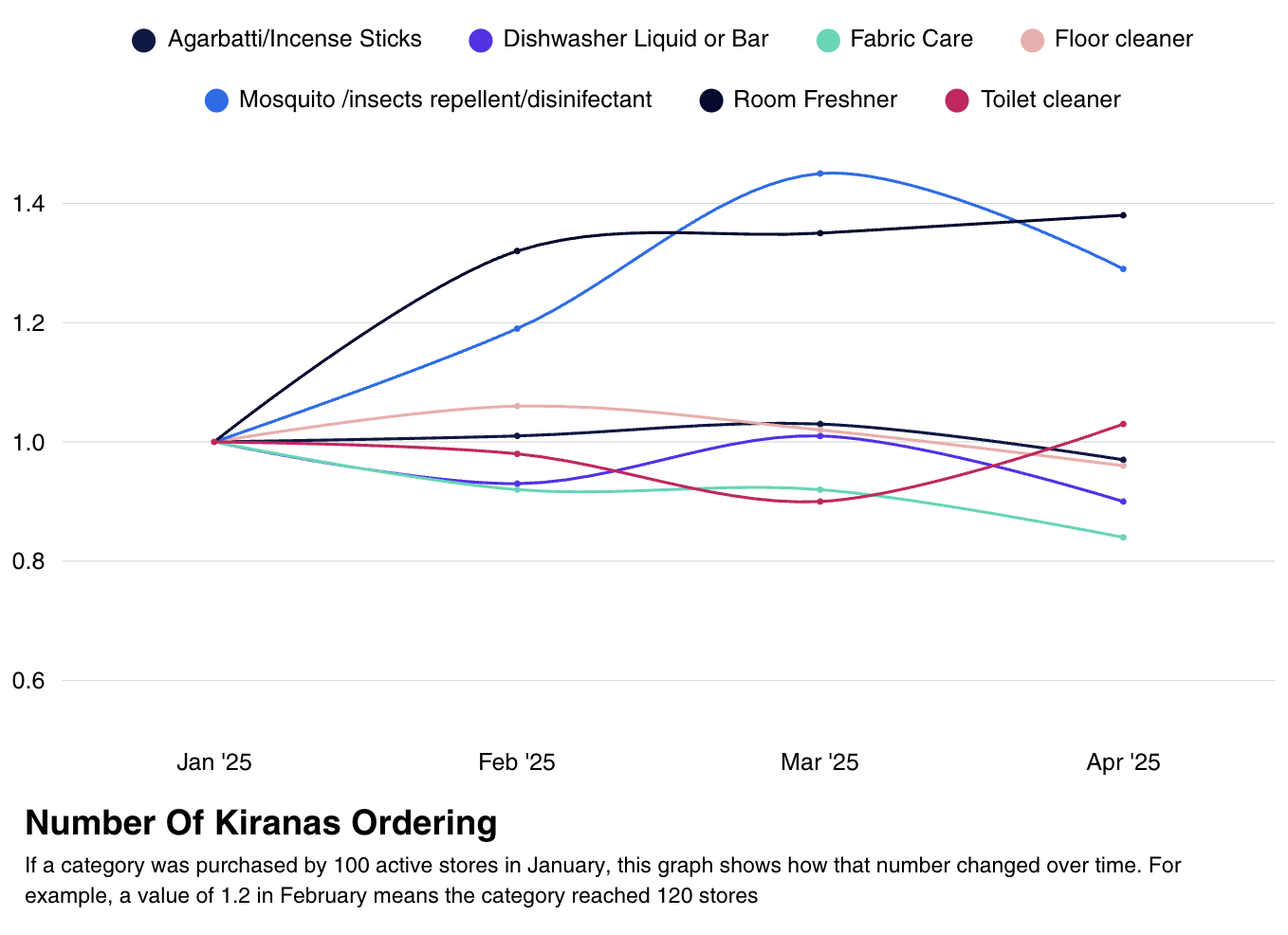
Home Care, on the other hand, hit a plateau. With a 3% decline in demand, the category showed signs of saturation. Even though retail reach grew by 6% YoY, core subcategories like floor cleaners and fabric care posted negative numbers. Only dishwashing liquids and room fresheners managed to buck the trend. Brands should watch for overstocking risks and consider smarter replenishment cycles.

📍 Regional View: The North Stands Tall

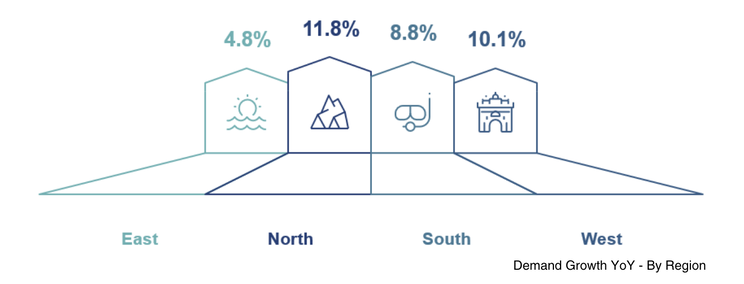
Regionally, North India was the undisputed winner in April, registering strong growth in Commodities, Dairy, and BeveragesWestern India followed with momentum across multiple categories, while Eastern India—plagued by cooler-than-usual weather—saw the slowest growth. In the South, traditional summer product demand remained muted, though packaged foods and personal care offered some lift.

🧺 Kirana Footprint: Fewer, But Far More Active

The total number of active Kiranas dipped slightly month-on-month, likely due to heavy stocking in March. However, YoY outlet activity is up 6%, meaning more stores are active this year than the same time last year. More importantly, these stores are ordering more per visit, signaling better throughput and stronger relationships with suppliers.

In terms of distribution leadership, Commodities expanded to 17% more outletsDairy to 4%, and Beverages to 8% compared to April 2024. Meanwhile, Chocolates saw an 8.4% drop, with other categories like Home Care and Packaged Foods remaining relatively stable.


🏙️ City Leaders: The Usual Suspects + Surprise Stars

Delhi NCR remained the category kingpin, leading across Dairy, Beverages, and Packaged Food. Mumbai held steady in Home Care and Commodities, while Bangalore featured heavily in Personal Care and Chocolates.

Among non-metros, Lucknow continued its quiet dominance—ranking in the top 3 across multiple categories. Kochi,Ludhiana, andJaipur also posted strong performances, reflecting how non-metros are fast catching up in consumption diversity and category depth.

Closing Thoughts

April shows us that India’s retail engine is adjusting to new rhythms. Consumers are moving toward affordable value, retailers are becoming smarter about inventory, and categories are responding in real-time. The key for brands lies in reading these micro-shifts fast—adjusting pack sizes, doubling down on high-throughput stores, and re-evaluating trade strategies in underperforming zones.

 If you’re building your next quarter’s plan, this month’s report is a goldmine of clues.

As always, I’m here, decoding every SKU shift and shelf story—so you can act smarter, faster, and sharper.

Warm regards,

RIO (Real Intelligence Officer)

Want to know how retail intelligence works?
Read more Blogs