

Smart Merchandising: A Comprehensive Guide for Outlet Management
by Bizom
August 04 | 06 min read
Share:
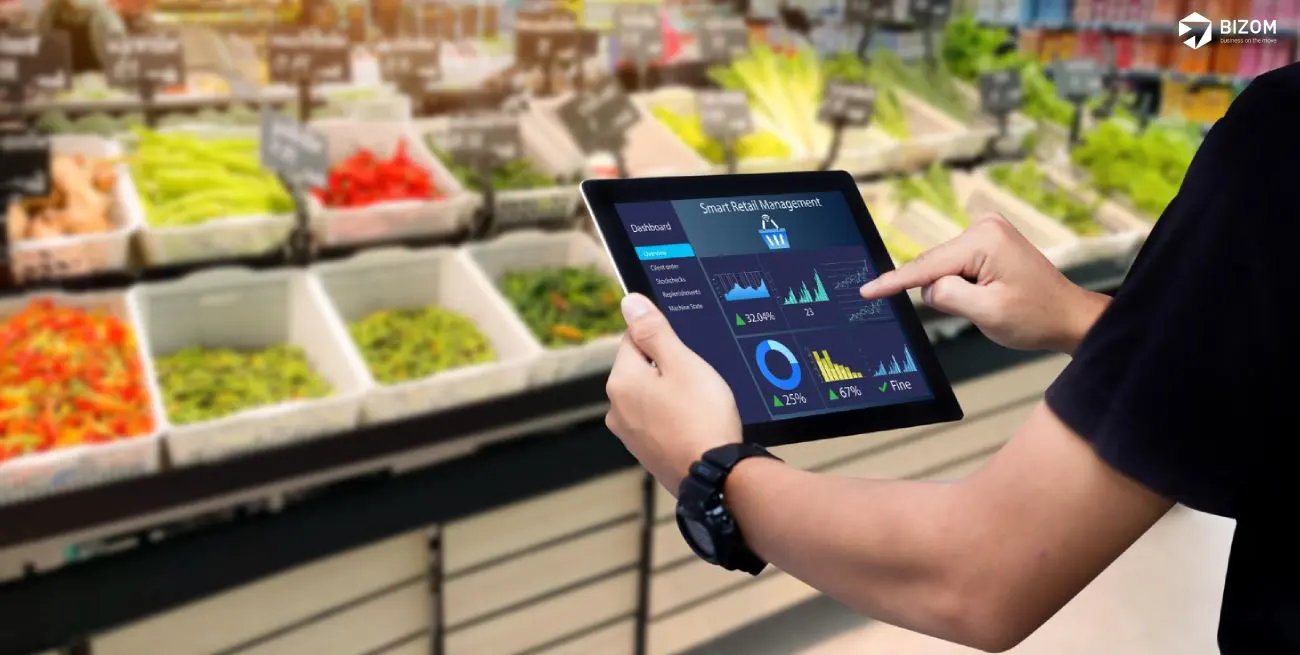
In the fast-paced world of consumer goods, retail shelves have become more cluttered than ever with vast products options. Therefore the need to optimize stock placement and make products stand out amidst the competition, is becoming a bigger challenge. This is where Smart Merchandising or Retail Merchandising comes as a savior for retail businesses, helping their fieldforce serve outlets more efficiently.
What is Smart Merchandising?
Smart Merchandising is a retail intelligence tool that combines in-store data, machine learning and AI to monitor every retail shelf to ensure the right products are placed at the right place, in the right manner.
Empowering the fieldforce to be excellent merchandisers, Smart Merchandising fundamentally helps monitor and improve their market share, product assortment, placement, pricing, and promotion strategies. In this blog, we will explore the importance of Smart Merchandising and how it is currently revolutionizing the retail landscape.
But often many get confused between Smart Merchandising and visual merchandising. While both are co-related, Smart Merchandising can be explained as a more evolved form of visual merchandising. Here’s how:
Difference between Smart Merchandising and Visual Merchandising
Hence, as a successor to traditional visual merchandising practices in retail, Smart Merchandising comes with much more capabilities that empowers the merchandisers to get the output from each store. Let’s delve into the advanced features of Smart Merchandising.
Benefits of Smart Merchandising
1. Stock and Shelf Management with Image Recognition Models
In today’s competitive retail environment, the appearance of products on the shelf can significantly impact consumer decisions. With Smart Merchandising’s image recognition models, retail companies can analyze their product’s shelf position and ensure optimal visibility. These models help identify out-of-stock items and shelf gaps, enabling quick restocking to avoid lost sales opportunities.
2. Monitoring Changes in Stock and Merchandise
Regularly monitoring changes in stock and merchandise is essential to maintain a competitive edge. Smart Merchandising enables FMCG companies to track product availability, facings, and product mix. By analyzing this data, companies can make informed decisions to improve their product assortment, optimize inventory levels, and capitalize on emerging trends.
3. Market Share in Retail Shelves over Time
Smart Merchandising empowers FMCG companies to assess their market share on retail shelves over time. By measuring product performance against competitors, companies can identify growth opportunities, refine marketing strategies, and stay ahead in the dynamic FMCG market.
4. Product Assortment and Distribution KPIs
A successful product assortment is vital for FMCG companies. Smart Merchandising offers a comprehensive approach to measure and improve product mix across various distribution and ranging Key Performance Indicators (KPIs). By analyzing data on product turnover, popularity, and consumer preferences, companies can tailor their assortments to meet customer demands effectively.
5. Planogram Compliance and Shelf Placement
Proper placement of products on retail shelves is critical for visibility and sales. Smart Merchandising allows FMCG companies to measure planogram compliance, ensuring the right products are displayed in the right places. This strategic approach helps maximize product visibility, leading to increased sales and improved customer satisfaction.
6. In-store Pricing and Competitor Intelligence
Pricing is a significant factor influencing consumer purchase decisions. Smart Merchandising facilitates in-store pricing audits and competitor intelligence gathering. By understanding competitor pricing strategies across direct and indirect distribution channels, FMCG companies can adjust their pricing strategies for better competitiveness.
7. Effectiveness of Promotion Strategies
Promotional activities play a vital role in boosting sales and brand visibility. Smart Merchandising helps FMCG companies measure the effectiveness of their promotional strategies by capturing Point-of-Sale Material (POSM) displays, secondary displays, and hot-zone compliances. This data-driven approach allows companies to refine their promotions and achieve higher returns on investment.
So to optimize outlet management, increase product depth and get the max ROI, Smart Merchandising is definitely a game changer!
Why Choose Bizom's Smart Merchandising?
- Seamless Integration: Bizom’s platform seamlessly integrates various merchandising tasks, making it a time-saving and efficient solution for FMCG companies.
- Data-Driven Decision Making: With access to real-time data, companies can make data-driven decisions to optimize their product mix, placement, and pricing strategies.
- Improved Visibility: Bizom’s Smart Merchandising ensures that products have optimal visibility on retail shelves, leading to increased sales and market share.
- Competitive Advantage: By monitoring competitor activities and promotions, FMCG companies can gain a competitive advantage in the market.
Conclusion
Smart Merchandising is an indispensable tool for FMCG companies looking to thrive in a cluttered retail landscape. By using innovative tools like image recognition models and platforms like Bizom, companies can efficiently manage their stock, improve product assortment, enhance planogram compliance, optimize pricing, and measure the effectiveness of their promotions. Embracing Smart Merchandising will enable FMCG companies to stay ahead of the competition and achieve long-term success in the dynamic retail industry.