by Nisha Narayanan
May 10, 2018 | 03 min read
Share:
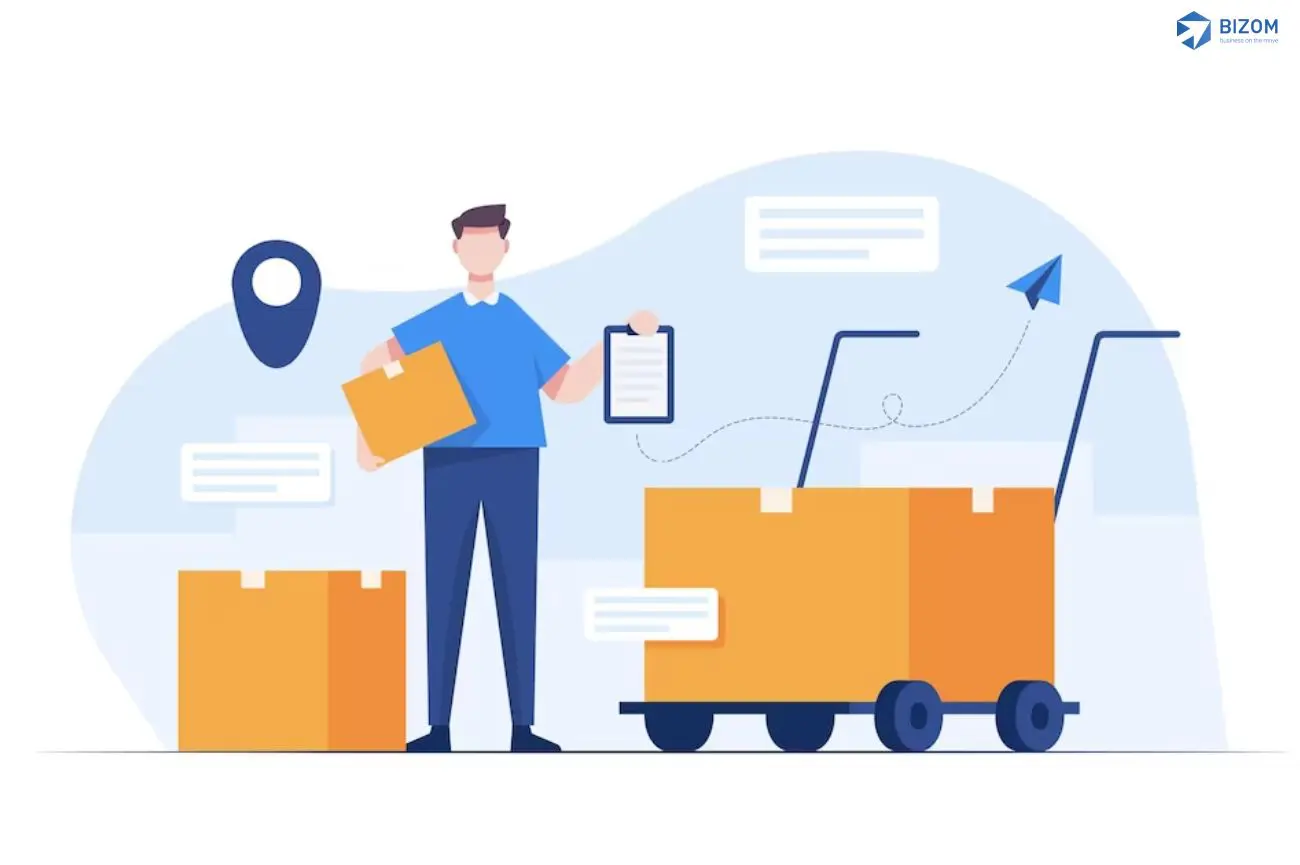
Late last year, Amazon India rolled out Amazon Business, its B2B marketplace with over 100 million products. Soon after, Walmart announced the opening of its first fulfilment centre to serve kirana stores. In March this year, Metro Cash and Carry announced that it was starting doorstep delivery for kirana store owners.
Why are these top names in retail suddenly turning their focus to B2B order fulfilment? What problem are they trying to solve?
Well, consider a scenario that plays out every day in small stores across India: It’s the height of summer, and Kumar, the owner of a small kirana store in a city, is finding that many of his customers are asking for a new soft drink that’s being advertised heavily during IPL matches.
Kumar has already run out of the stock he received last Wednesday and would like to order a new, larger batch to keep his customers happy. However, the brand’s salesman’s beat brings him to Kumar’s shop only next Wednesday, which is three days away. Kumar knows that considering that there are hundreds of shops like his in the distributor’s area he is likely to get delivery of his order only 2-3 days after that and even then it’s only likely to be partially fulfilled given the heavy demand. He would probably also need to buy a slow-moving product to keep the distributor happy.
So for nearly a week Kumar must turn valued customers away from his store (and towards the big supermarket nearby) and lose out on revenue and customer trust and goodwill. The brand too loses out on the momentum created by the expensive ad blitz and possibly revenue and customer loyalty.
The Problem
If this sounds like an absurd situation, consider the fact that this has been the reality on the ground for several decades now. As all FMCG professionals know the retail supply network in the industry works on a top-down, push-based model. This is how it works:
- Brands send sales executives to retailers either directly or through distributors.
- Sales executives visit retailers as per their beat – on average 40-60 stores are covered on a daily beat – and collect orders on a form or, increasingly, on an order-taking app, and report the orders to the distributor/brand at the end of the day.
- The distributor/brand sends out delivery vans whenever they feel they have an optimal number of orders to deliver in an area and fulfils the order either completely or in part – well-run brands fulfil over 70% of the orders on average but fulfilment rates are far lower for many others.
This is no doubt a simplistic description of an extremely complex delivery model. But that’s precisely the point – the current model is so complex and slow that it’s costing everyone in the ecosystem, from brands to distributors to retailers to consumers, precious time and money. Clearly, the system is ripe for disruption.
The Solution
Now imagine this: Kumar, faced with high demand for the soft drink, opens up an ordering app on his phone, searches for the product, select the quantity he requires and clicks buy. The order reaches the brand immediately and the order is delivered within 24 hours by a local partner (a distributor or stockist/sub-stockist) in a two-wheeler/rickshaw/van. Kumar can serve his customers seamlessly and the brand stands a chance to increase customer loyalty and revenues and gains a better ROI.
This bottom-up, direct brand-to-retail supply model has more game-changing benefits for all players in the ecosystem:
- Brands get access to real-time, drill-down data on market demand that they can use to streamline manufacturing and upstream and downstream supply to ensure that they have enough stock available to meet demand (and nothing more).
- Intermediaries like wholesalers, distributors, stockists and sub-stockists are also able to see orders immediately and plan to fulfil 100% of the orders in a matter of hours.
- Retailers get their orders delivered within hours rather than days and are able to compete with bigger competitors in modern trade and e-commerce in serving customers on demand.
- Consumers get their favourite products when they need them, where they need them, and at a good price (owing to lower costs for brands; see below).
What’s more, all these benefits come at a lower cost of capital for everyone involved as the system ensures better-working capital utilization by facilitating just-in-time, optimal stocking and efficient delivery. This ultimately reduces the network’s reliance on credit (brands usually provide goods to distributors on credit, who in turn extend credit to retailers, trapping all of them in a never-ending cycle of debt.
The New Ecosystem
Considering the big problems the technology-driven direct-brand-to-retailer model solves – and the enticing possibility of taking a piece of the ~$70 billion FMCG market – many companies, big and small are now building partnerships with brands and selling order-taking apps to retailers. This list includes marquee names such as Amazon B2B, Walmart and Metro Cash and Carry as well as small startups, including Bizom’s sister brand Distiman.
It’s still too early to predict winners and losers, but the initial results are encouraging across the board. According to reports in the media, the turnover of Amazon’s wholesale business multiplied 2700 times for the fiscal year 2016-2017, validating their B2B thrust. Metro Cash and Carry’s CEO Arvind Mediratta, too expressed faith in their doorstep delivery model for kiranas: “A lot of small businesses gravitate towards us as they don’t get credit or working capital loans, have lower fill rates, don’t have enough SKUs (stock keeping units) and are forced to stock certain products.”
Among smaller players, some well-funded companies like Shotang and Just Buy Live (JBL) seem to have shut shop while others like Distiman are growing steadily by convincing brands and retailers of the value of a multi-brand direct distribution system.
Case Study – Distiman
Distiman is a stock ordering app from Mobisy Technologies (the company behind Bizom) that allows retailers to order stock for thousands of products from over 300 brands across different product categories. Distiman fulfils these orders within 24 hours by using a hub-and-spoke model that uses local franchisees and young entrepreneurs for last-mile delivery. This allows brands to focus on meeting demand while the platform takes care of core distribution and marketing execution.
The app was envisioned as forward integration for sister brand Bizom’s suite of solutions for sales network automation that includes their market-leading sales force automation, distributor management and retail execution modules. “We have already built technology that crunches vast amounts of supply chain and retail consumption data to provide intelligent predictions on the right stocking for everyone in the supply chain, including distributors and retailers. This greatly drives up the capital efficiency of these businesses. Plus, we are an ecosystem player. We are leveraging our existing relationships with more than 160 brands with reach to more than 10,000 distributors and more than a million retailers pan India,” said Mobisy’s Chief Growth Officer Arun Narayanan in a 2016 interview.
Fast forwarding to 2018, their bet seems to be paying off. Distiman now services retailers in Kolhapur, Maharashtra, and Mysore, Karnataka, and has onboarded more than 3000 retailers with an average drop size of Rs. 4300. According to company sources, Distiman’s monthly GMV is increasing 20% MoM.
According to Niranjan Anand, lead of Distiman operations, the success of their model stems from the company’s deep understanding of the retail ecosystem and the relationship it has built with brands over the years. “While Distiman is a game changer for retailers, we also offer many advantages to brands. Our multi-brand model helps brands service outlets more efficiently, providing them with almost 50% higher ROI than what can be delivered by a single brand. We give brands reach in tier-2 and -3 crowds where it’s not financially viable for them to operate through single-brand distributors. Also, brands can directly communicate offers, and loyalty programs or even get research done with retailers individually or by segments. Most importantly, on-demand, just-in-time secondary order fulfilment eliminates stock-outs and makes products available for the final consumer when and where they need it.”
A Game of Numbers
Distiman’s numbers speak for themselves:
- 3x more SKUs of a wider variety of brands available at outlets.
- 40% increased sales for retailers using Distiman.
- Retailer service time reduced to less than 24 hours from 1 week.
- Distiman stockist’s capital turnover is 5x that of traditional distributors resulting in a 3x higher Return of Capital Employed.
How Tech Companies Can Deliver True Value
We believe that while there are several ways in which this model can work, there are some critical features that a technology vendor must provide to ensure success for brands and retailers:
- First and foremost, a new solution must aim to leverage and streamline the current ecosystem of distributors and stockists/sub-stockists, and not bypass the network which was built over decades and possesses vast stores of business knowledge and wisdom.
- It must deliver real value beyond 24-hour delivery and easy credit and work to weed out limiting practices such as the debt cycle by enabling data-driven decision-making around the optimal stocking.
- It should easily integrate with related digital systems like sales force automation, distributor management and retail merchandising to allow brands a 360-degree view of market demand and channel partners’ activities.
- It should offer data analytics that can drive business decisions up and down the supply chain.
In conclusion, as technology adoption skyrockets in the tradition-bound FMCG sector, nudged along by environmental imperatives such as GST and digital payments, the next few years will see major disruptions in how business is done. The brands that survive the inevitable shakedown will be the ones that use technology to improve their supply network and reach out to partners directly. The technology partners that help these companies up their game will reap rich dividends. The challenge is in winning hearts and minds by devising a model that marries the best of traditional models with the best of what technology has to offer. Watch this space for news and developments in this quiet retail revolution.
To understand the impact Distiman makes on the lives of small kirana store owners, watch this video.
For more information, call Distiman at 080 41108397.