

The Rise of Makhana: India’s Superfood Revolution
by Mehak Jaggi
April 17 2025 | 08 min read
Share:
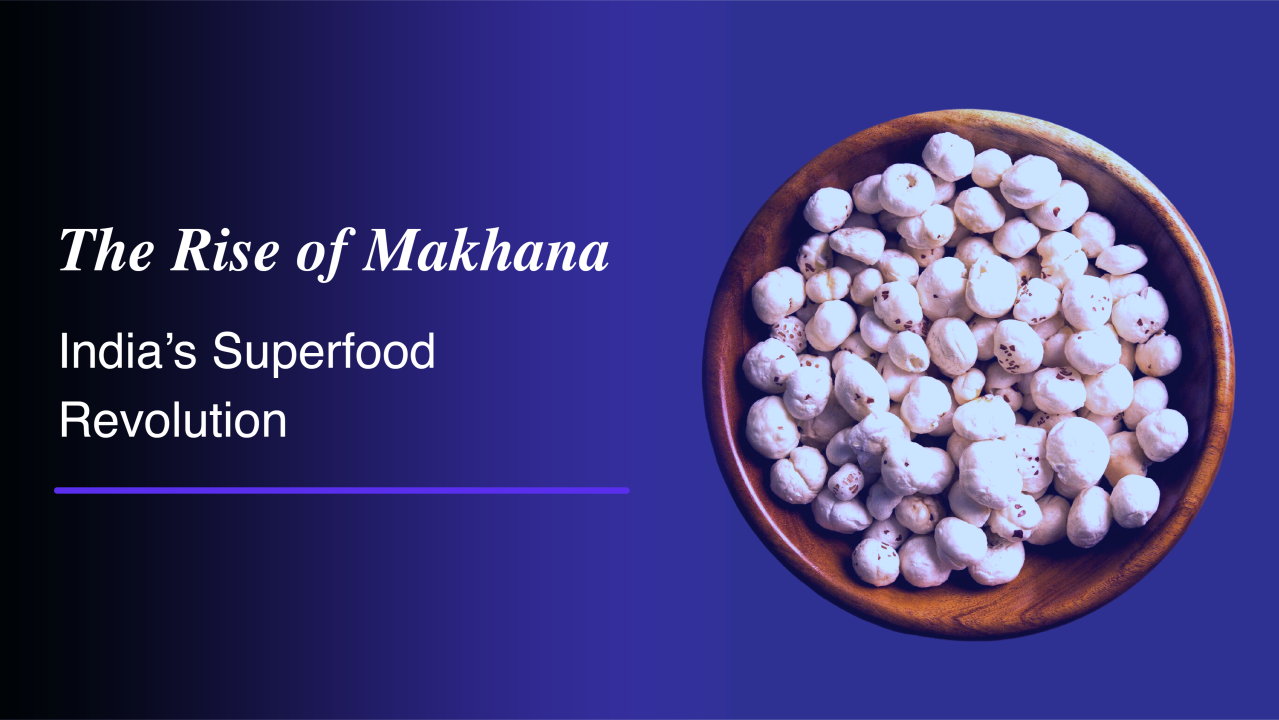
The health revolution isn’t coming—it’s already here. And perhaps that’s why you’re reading about makhana today.
You’ve probably noticed it—every boardroom snack table, wellness influencer’s pantry, or premium retail shelf now seems to feature this ancient Indian superfood. Makhana, or fox nuts, once offered during religious ceremonies, is now being hailed as the “quinoa of the East.” But is it a fleeting trend or a billion-dollar opportunity hiding in plain sight?
Let’s rewind.
From Mithila’s Ponds to Global Palates
Makhana is native to the wetlands of Bihar, and remarkably, this single state still produces over 90% of the global supply. It’s a livelihood for over 2.5 lakh farmers—but until recently, the market was largely unorganised. That is now changing quickly.
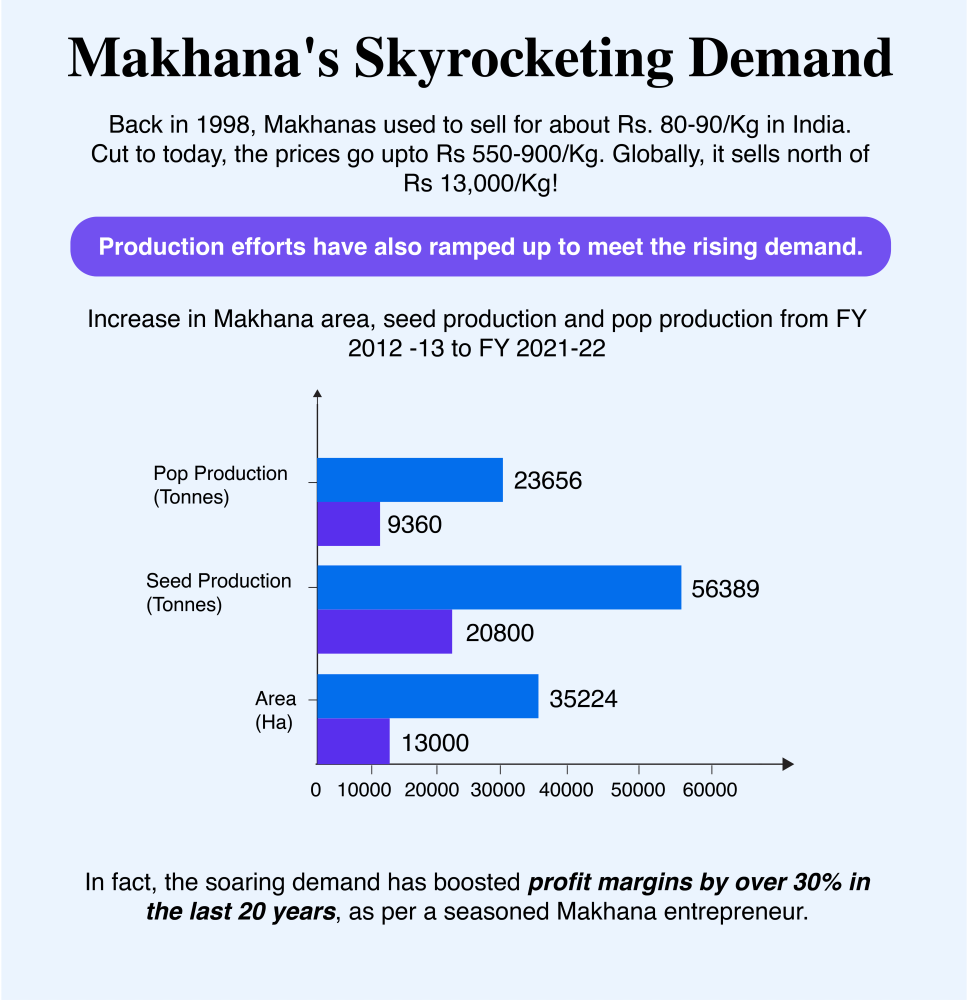
With India’s makhana market already valued at ₹3,000 crore and growing at 9–10% CAGR, exports have surged from just 5,000 metric tons in 2018 to over 25,130 metric tons in 2024. This surge in global demand is fuelled by rising awareness of plant-based diets, low-GI foods, and high-protein snacking.

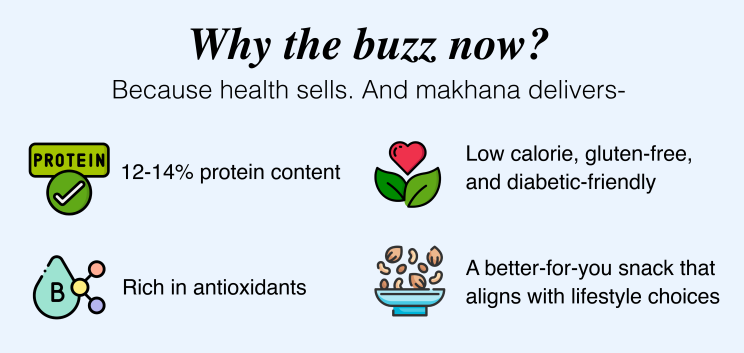
It’s no wonder that the urban, health-aware consumer is stocking up on makhana.
Urban Craze, Rural Roots
While makhana farming is rural, its consumption is dominated by urban India. Branded makhana products have become the darlings of D2C snack brands and retail chains alike, often priced at a premium.
Still, only 10-15% of makhana sold in India is branded, leaving a massive white space. The rest—sold loose or under small local names—lacks consistency, hygiene, and consumer trust.
Cracks in the Supply Chain = Opportunity
Despite its growth, makhana’s journey from pond to packet isn’t seamless:
- 60% of processing is still manual → high wastage (~20%)
- Price instability → small farmers can’t forecast returns
- Post-harvest losses → profit leakages up to 20%
- Minimal Branding → consumer trust is low outside metros
But that’s precisely where transformation lies.
The Export Engine Is Warming Up
Global markets are waking up. The US, UK, Canada, and the Middle East are now major buyers. With India’s Agri-Infrastructure Fund (₹100 crore) and One District One Product scheme backing makhana, it’s not just a health snack—it’s an export commodity. Think quinoa, but Indian.
The Indian government is paving the way for scale:
- ODOP Scheme: Makhana declared Bihar’s flagship product
- MSP Consideration: Under review for pricing stability
- Export Push: APEDA is improving global processing standards
- Agri-Infrastructure Fund: INR 100 crore invested in supply chain upgrades
There are many Indian superfoods—Jamun, Millets, and more—that haven’t yet had their moment. The potential is massive, and the ceiling is finally cracking.
India’s top superfoods in 2025—Makhana, Ashwagandha, Ragi, and Moringa—are gaining global popularity for their health benefits and natural origins. Makhana leads in healthy snacking, Ashwagandha thrives in wellness supplements, Ragi is popular in gluten-free diets, and Moringa is rising in superfood powders and teas. Each shows strong market growth (8–12% CAGR), reflecting the global shift toward clean, plant-based nutrition.
| Superfood | Market Size (2024) | Projected Growth (2033) | CAGR (2025-2033) |
|---|---|---|---|
|
Makhana (Fox Nuts) |
₹8.5 Billion |
₹19.6 Billion |
9.22% |
|
Ashwagandha |
₹16 Billion (estimated for wellness market) |
₹35 Billion |
~ 10-12% |
|
Ragi (Finger Millet) |
₹2.8 Billion (for millet-based foods) |
₹8.6 Billion |
~ 8-10% |
|
Moringa (Drumstick Leaves) |
₹2.3 Billion |
₹9.3 Billion |
~ 9-11% |
Makhana is more than just a trending snack—it’s a symbol of India’s growing influence in the global health food space. Backed by strong government support, export demand, and rising consumer awareness, it’s breaking into the mainstream like never before.
But this is just the beginning.
At Bizom, we believe in being part of this health revolution. With real-time insights, supply chain intelligence, and outlet-level execution, we help brands get the right product to the right place at the right time.