
Where Intelligence Becomes the Interface – RI Tour 3.0 Mumbai
by Feroz Shaikh
May 21, 2026 | 02 min read
Share:
Enterprise execution is entering a new phase.
For years, frontline systems were designed around dashboards, workflows, and manual inputs. Sales teams adapted themselves to software, often navigating multiple screens and processes just to complete routine operational tasks.
Today, that model is beginning to shift.
While much of the industry continued building around interfaces, Bizom was already moving in a different direction by embedding real intelligence directly into frontline execution across sales, distribution, merchandising, and retail visibility. From early AI-led workflows to agentic execution systems, the company has consistently stayed ahead of how Route-to-Market technology evolves.
It is often too bold for a software company to say that the future of software is no software.
Yet that belief sits at the centre of the Vision 2030 journey.

The larger thesis is simple: enterprise systems should not constantly demand attention from people. Intelligence itself should become the interface, operating contextually in the background while helping teams make faster decisions, capture richer field intelligence, and execute more naturally in the market.
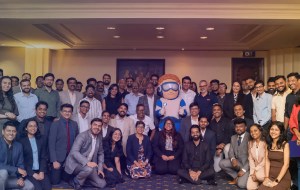
That broader industry transition formed the foundation of RI Tour 3.0 – Mumbai, hosted at ITC Maratha as part of the ongoing journey towards the Invisible Interface. The evening explored how AI, voice, visual intelligence, and contextual systems are reshaping the future of frontline execution across the CPG ecosystem.
A recurring perspective throughout the evening was clear.
The next competitive advantage may not come from giving teams more software, but from reducing how often they need to open it.
Leadership Perspectives on the Next Era of Execution
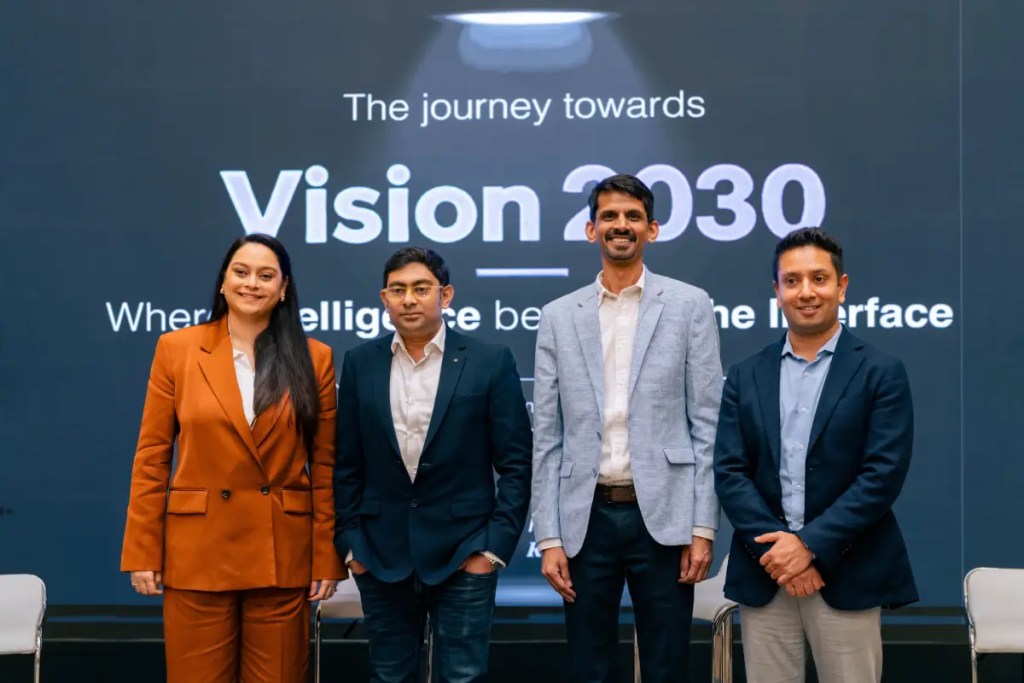
The evening opened with a panel discussion moderated by Reshma Pokharkar, former Sales Director at Moët Hennessy, who framed the conversation around a shift already beginning to reshape enterprise execution: software is gradually moving from being something teams constantly operate, to something that works more intelligently in the background.
Madhu Kris, VP – Growth APAC at ParallelDots, spoke about how enterprises today have access to more systems and more data than ever before, yet operational latency continues to remain a major challenge.
“All organisations today have data. What they are still solving for is operational latency.”
Building on that perspective, Aritra Chakraborty, Digital Technologies Partner at Royal Canin, explored how enterprise systems are evolving beyond interface-heavy workflows towards more frictionless and contextual execution environments, especially through voice-led interactions.
“Voice interaction will not remain a feature. It will become the operating system itself.”

This connected strongly with the showcase of Bizom Marshal, the company’s voice-enabled execution capability built around conversational intelligence. Marshal demonstrated how field conversations themselves can become structured execution intelligence in helping sales teams capture orders, surface objections, identify KPIs, and generate contextual insights directly during retailer interactions without interrupting the natural flow of work.
The discussion also explored the growing importance of vernacular intelligence and visual AI in markets like India, where localisation and contextual understanding are becoming critical to improving frontline productivity.
Apar Maheshwari, Vice President – Products, Systems & Solutions at Lauritz Knudsen Electrical & Automation, brought the conversation back to one of the most important realities in enterprise transformation: adoption.
“People don’t buy software. They buy simpler outcomes.”
The broader consensus across the panel was clear: the future of enterprise execution will not be shaped by adding more software layers, but by building systems that reduce friction, understand context, and work more naturally alongside people.
What the Open Conversations Revealed
Following the showcase, the evening transitioned into smaller roundtable conversations involving industry leaders and Bizom representatives across the room.
What emerged from these discussions was that the biggest challenge in AI adoption may not be technology, but behaviour.
Several participants observed that frontline teams are already naturally shifting towards conversational and visual communication through voice notes and images instead of lengthy manual updates. At the same time, the room repeatedly returned to the importance of trust and ensuring intelligent systems are experienced as support for field teams rather than surveillance.
There were thoughtful conversations around retailer consent, data ethics, and the role of relationship intelligence in frontline execution. One particularly memorable analogy compared future enterprise visibility systems to “Sanjay” from the Mahabharata: giving leadership real-time visibility into market realities while preserving the human context behind them.

Another recurring insight was that high-performing salespeople are often distinguished not just by process efficiency, but by their ability to build trust, adapt conversations, and understand context on the ground. Many leaders believed the future role of AI would be to help organisations strengthen and scale those instincts across larger frontline teams.
The broader consensus across the room was clear: the future of enterprise execution will depend as much on behavioural transformation as technological advancement. AI adoption will succeed when intelligence becomes genuinely useful, intuitive, and trusted within everyday workflows.
Defining the Next Era of Execution
For years, the industry focused on helping people work through software.
And as the Invisible Interface moves closer to reality, the organisations shaping that future will not simply adopt change.
They will help define it.