

From Bachat Ki Cream to Bollywood Dream
by Sam Richardson
August 7, 2025 | 05 min read
Share:

For Decades, Yeh Kitne ka hai? was the opening line of every Indian shopper’s when exploring new products. The mass market ruled with affordable shampoos, staple creams and value soaps which were designed for reach and the relentless hustle of middle-class lives. But today, when you step into a kirana store or scroll through an e/q-commerce site, you’ll notice something that is nothing short of a plot twist.
Looks like, the story of 2025 personal care isn’t about stretching every rupee. It’s about stepping up to better, bolder, and beautifully premium – or is it?
The Data Behind the Shift
The recent Kirana Report published by Bizom’s data intelligence team revealed that Personal care is one of the fastest growing FMCG segments.
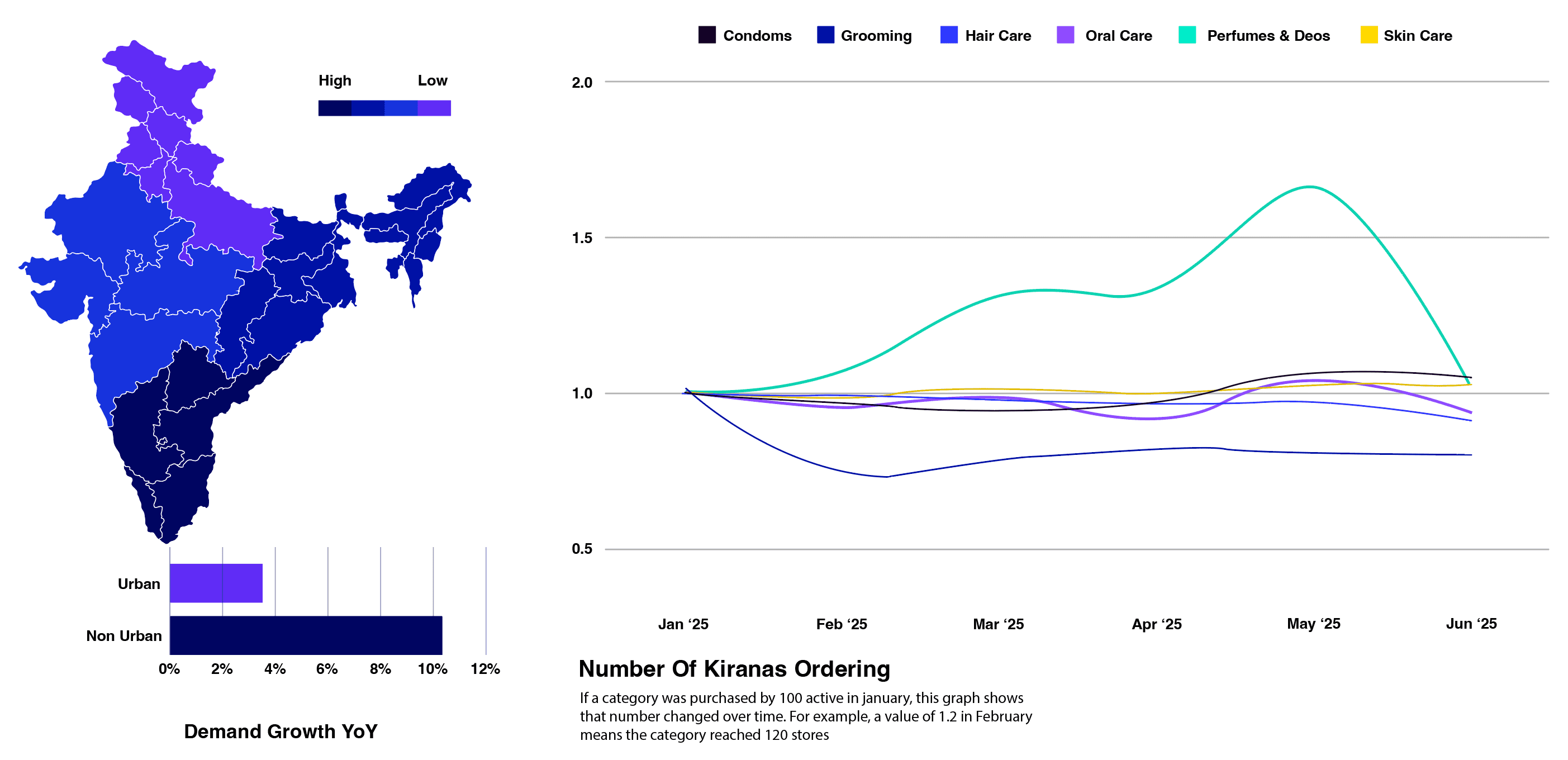
June 2025 retail analytics reveal double-digit year-on-year growth: Oral Care climbed by 12%; Skin Care by 10%. But not all is rosy, Grooming slipped by 1% and Hair Care shrank by 2%, showing premiumisation is selective, not universal.
Urban markets are driving the change, with kiranas reporting a 6.2% rise in personal care sales well ahead of the 3.6% growth in rural stores. Yet, opportunity is everywhere: a 7% increase in active retail outlets reflects growing penetration, especially into Southern and Eastern rural belts.

Bigger Packs, Bigger Tickets
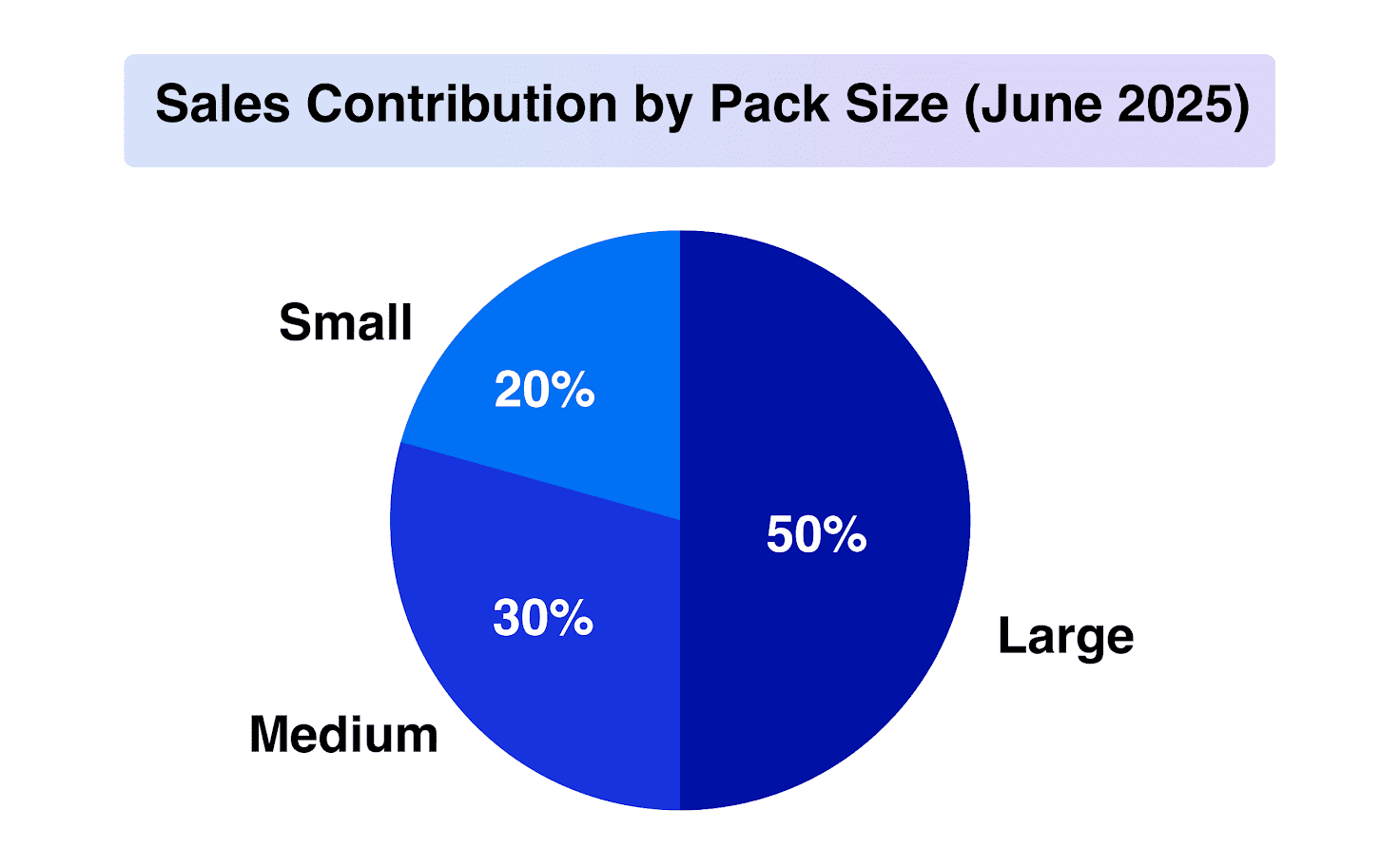
While the number of units sold is steady, average ticket sizes are spiraling up thanks to a shift toward larger pack sizes and premium price points. In fact, medium and large packs are dominating, showing Indians are willing to spend more upfront for added value.
The Premiumisation Divide: Urban Luxury vs Rural Stealth Upgrades
Picture a beauty shelf in a Mumbai supermarket: bold bottles promising hyaluronic acid magic and glowing skin, luxury serums costing thousands of rupees, and chic grooming kits. That’s the urban story: premium fragrances, scientific anti-aging products, and ingredient-led claims, especially among younger, savvy shoppers hunting for the Glow-to product.
Travel to a Tier-2 town or rural Kirana: itʼs the rise of the “bridge” product. Here, families are opting for bigger herbal lotion packs, multi-benefit creams, and improved quality shampoo at slightly higher price points. The approach is subtle: offer a taste of premium but wrap it in value and practicality. Small-town India is premiumising too, but without abandoning its budget roots.
This isn’t premiumisation in the Western sense. It’s a uniquely Indian model – a blend of functionality, familiarity, and thoughtful indulgence.

Winning the New Personal Care Consumer
For Brands: Urban shoppers need the real deal – strong ingredients, aspirational branding, science-backed SKUs, and digital-first launches. For rural and small-town stores, think affordable upgrades bridge products with visible improvements in quality, size, and trust but at accessible prices.
Innovation in Distribution: Brands cannot pretend it’s one-size-fits-all. Modern trade must focus on high-margin luxury SKUs; traditional retail must push bridge products and educate retailers about upselling larger pack sizes and new benefits.
On the ground, distributors and retailers need education and enablement, especially to upsell premium SKUs and bridge packs that offer better margins and greater consumer satisfaction.
Massifying Premium, Personalising Mass: India’s FMCG Tightrope
Premiumisation in India isnʼt about gold-label stickers or imported names alone. It’s about context, delivering the right blend of exclusivity and accessibility, luxury and usefulness, metro chic and rural practicality. The brands that master this balancing act, urban trendsetters on one hand, rural value seekers on the other are the ones who will win the next chapter of Indiaʼs personal care FMCG story. |
Want to decode premiumisation in your category? Let’s talk about strategy. |