by Bizom
July 12, 2022 | 05 min read
Share:
Retail automation is there in some form or the other in every market today. Tea sellers are accepting UPI payments and big shot companies are chatting on WhatsApp with every customer to make selling more personalized.
This happens because, for retail companies, the need to automate sales is paramount as thousands of product units are sold every day, from different markets and by hundreds of different people.
Starting from the SKU number of the product to the shop number where that SKU is sold, there are millions of information that need to be collected. Moreover, each sale and salesmen need to be tracked to get a real-time, wholesome view of product, category and brand performance and to maintain steady sales efficiency.
But doing this manually exposes retail companies to too many errors which again need to be rectified. That’s precisely why retail automation exists.
So, what does Retail Automation mean?
Retail automation is the process of using technology, AI, and algorithms, to set up processes and systems that can digitalize manual, mundane, and time-consuming supply chain operations and track the efficiency of every sales function.
Retail automation is the process of using technology, AI, and algorithms, to set up processes and systems that can digitalize manual, mundane, and time-consuming supply chain operations and track the efficiency of every sales function.
The 10 biggest benefits of retail automation are:
- Lower cost of labour and faster output.
- Increases the performance and productivity of the entire sales team.
- Keeps your sales data consistent, accurate, and clean.
- Easier identification of growth opportunities with a bird’s eye view of sales in every market.
- Gives real-time visibility on the performance of every brand, category, product, region, distributor, retailer, and salesman.
- Offers data-based sales appraisals.
- Higher sales efficiency can grow revenue in double digits.
- Keeps a check on every sales rep’s productivity to ensure they are working efficiently.
- Provide automated journey plans to each salesperson, every day.
- Gives complete sales transparency helping the top management track the movement of every sale remotely.
In retail, a single product takes a long time to reach the end consumer, having to go through a distributor and retailer. So, when sales functions are automated and tracked digitally, the company realises revenue faster.
Each stakeholder gets a clear view of orders that have been placed (demand) V/S orders that have been fulfilled (supply). At the ground level, sales automation builds transparency and trust amongst sales teams and makes selling more fun and less mundane.
Here’s what a 360° framework for automating the retail supply chain looks like:
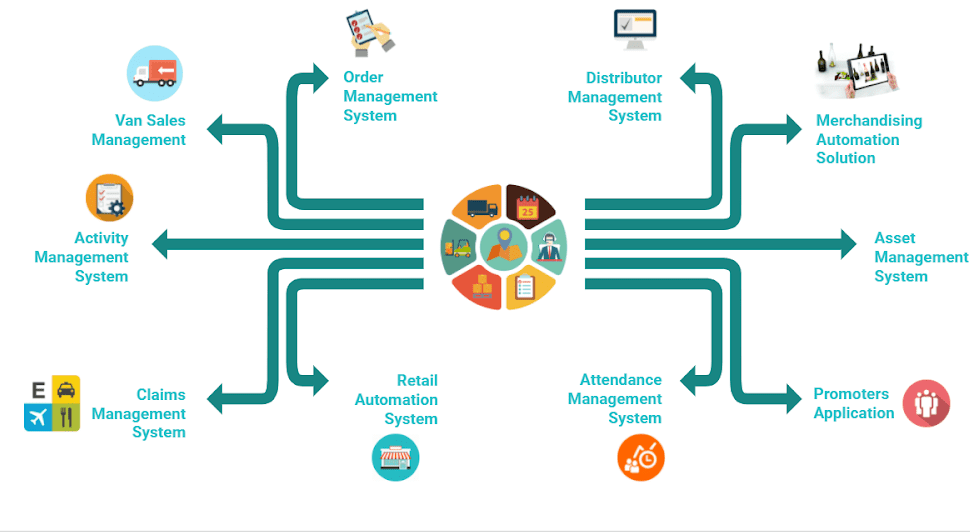
Components of Retail Automation
Order Management System: Intuitive mobile-based ordering to enable the retail salesmen to take orders digitally and pass them on to the company for immediate fulfilment. This reduces the lead time and ensures product availability is not hindered.
Van Sales Management: Ensures correct stocking of van and ideal drop off at outlets with sale suggestions by pre-coded algorithms.
Activity Management System: Customizable, mobile-based survey tools to help retail salesmen capture important market information, precisely.
Claims Management System: User-friendly, digital solution to punch claims as per pre-programmed claim type at any time and from any location, without causing any hindrance to the productivity of the sales teams or distributors.
Retail Automation System: A mobile app for the retailers to connect the company directly with every retailer to get sales orders faster and to gain greater market visibility.
Attendance Management System: Mobile-based, geo-tagged, attendance management system to let sales reps mark their attendance and absence from any location.
Promoters Application: Smart mobile solution to manage schemes and discounts of every seller on a phone and to monitor the effectiveness of each promotional scheme through dashboards, real-time alerts and role-wise communications.
Asset Management System: Digital application to keep track of service requirements of every asset at every shop, to eventually lower asset downtime and drive better asset health and improved compliance.
Merchandising Automation Solution: Mobile-based tools that can enhance retail execution and improve a company’s merchandising efforts through retail data collection and analysis, while ensuring right stocking and in-store promoter compliance.
Distributor Management System: A full-suite, digital retail solution to completely automate distribution workflows and give absolute visibility on inventory and every transaction within the supply chain.
But before buying the tools, you need to have the right clarify. To get the best results from automating retail, you must keep in mind the most required features of retail automation:
- Retail focused tech – Most retail automation companies in the market provide half-baked solutions, which are fragmented. Some help in managing orders while others help in managing leads or inventory. But automating the supply chain requires a compact system where every type of solution is connected to each other, providing a 360° visibility of the entire supply chain.
- Technology that aids strategies: An automation tool cannot replace your marketing strategy, instead, it helps deploy your plan. So, before choosing the plan, make sure you articulate your goals to tackle the new solution. The software company you partner with should give you the right suggestions to get the best results. They should offer customized support to overcome pain points connected to outbound, inbound, sales, and more.
- Growth-driven solutions: Automating a retail business from end to end is a big task, which requires a lot of time management and change management. Once you choose a solution provider and automate your retail business, it would be extremely difficult to switch to something else. So, check carefully if the solutions are flexible enough to be modified basis your future business needs. Using a redundant tool that lacks the capabilities to change as per the market dynamics, can hinder the company’s growth curve in the future.
An end-to-end retail automation platform should have distinctive tools for each phase of the retail automation journey.
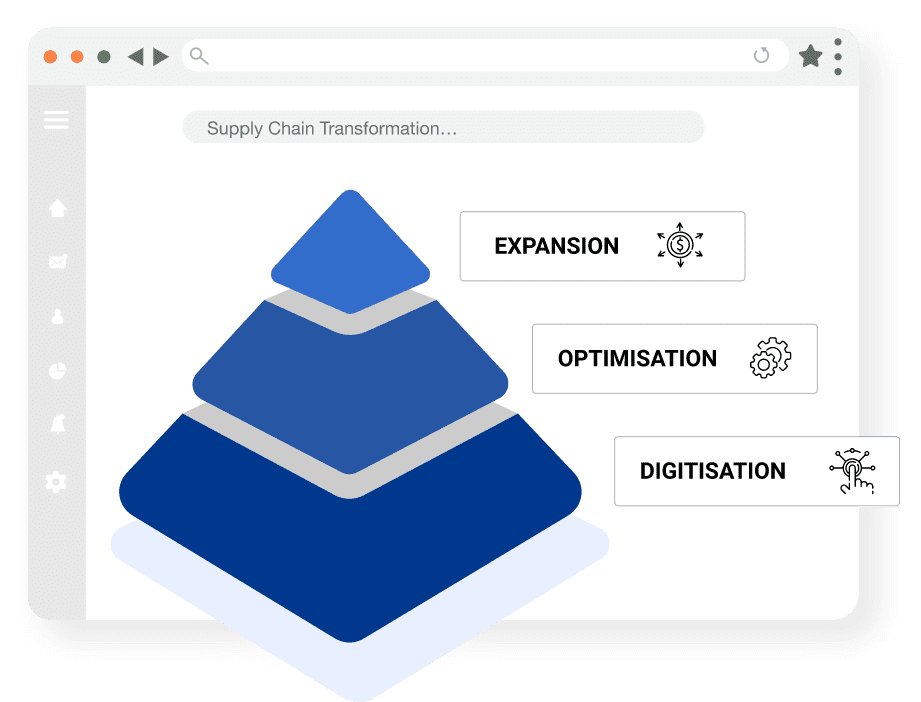
Digitalization – Tools for digitalization will build the base for intelligent retail through digital transformation. Retail digitalization tools have a primary focus on automating each process in the supply chain.
Optimization – To optimize retail operations, supply chain optimization tools should identify each distribution process and which operations need a technological boost for higher efficiency.
Expansion – Retail tech tools that are built for expansion should help discover opportunities in consumer markets, which otherwise wouldn’t have been visible. Keeping in mind the outcome the organization is looking to drive, each expansion tool will aid the process of achieving the goal.
Retail automation as a whole, acknowledges the journey of a brand across the supply chain to connect every touchpoint and collect the right insights in real-time. Organizations can enhance their sales and win rates by choosing the right opportunities, efficiently handling the sales pipeline, and anticipating sales precisely.
Transform Your Retail Distribution With Bizom
Bizom’s retail intelligence platform works with over 550 brands across the world to help them build stronger supply chains and serve 7.5 Mn+ retailers every day.
Some of the best examples of retail automation in the world have been incorporated by Bizom.
Legendary brands like Colgate, Hershey’s, Frooti, Coca-cola and more who are part of everyday consumer lives, leverage Bizom’s full-stack retail automation tools to increase their distribution capabilities and intensify their supply chain growth.
Here’s the story of Hershey’s and Bizom:
You too, can digitally transform your retail supply chain with Bizom’s robust retail automation platform!