

Distribution Channels: Types, Benefits, and How to Choose the Right One
by Ganesh Aradhya
June 25, 2026 | 04 min read
Share:

Learn what distribution channels are (in context of retail), explore their different types, understand why they matter for business growth, and discover the key factors to consider when choosing the right distribution strategy.
What is a Distribution Channel ?
A Distribution channel is the path through which a product travels from the manufacturer to the final customer. It includes the people, organizations, and processes involved in making products available for purchase. A distribution channel may involve multiple intermediaries such as wholesalers, distributors, retailers, or e-commerce platforms. In some cases, manufacturers sell directly to consumers without involving any intermediaries.
Types of Distribution Channels
Following are the types of distribution channels in retail FMCG and CPG space.
1. Direct Distribution
Direct distribution is a model where manufacturers sell products directly to customers without using intermediaries. Common channels include company-owned stores, brand websites, mobile apps, direct sales teams, and subscription services. This approach offers higher profit margins, better control over pricing and customer experience, and direct access to customer feedback. Its main challenges include higher operational costs, limited market reach, and greater responsibility for logistics and customer service.
2. Indirect Distribution
Indirect distribution involves intermediaries such as distributors, wholesalers, and retailers who help move products from manufacturers to customers. This model, commonly used in FMCG, consumer electronics, pharmaceuticals, and consumer durables, enables businesses to expand into new markets with less logistical effort. It offers wider market coverage and access to local market expertise, though it also results in lower profit margins, reduced control over the customer experience, and greater dependence on channel partners.
Different Levels of Indirect Distribution are –
(a.) One-Level Distribution
Products move directly from the manufacturer to the retailer before reaching the customer. This model offers faster product movement, better pricing control, and a simpler distribution network.
(b.) Two-Level Distribution
Products pass through a wholesaler before being supplied to retailers and sold to customers. This structure helps businesses increase market reach by leveraging wholesalers’ storage, distribution, and retail relationships.
(c.) Three-Level Distribution
Products are distributed through a distributor and wholesaler before reaching retailers and end customers. This model is ideal for businesses seeking wider geographic coverage while benefiting from regional expertise and efficient supply chain management.
(d.) Multi-Level Distribution
Products flow through multiple intermediaries, such as super stockists, distributors, wholesalers, and retailers, to achieve maximum market coverage. This approach is best suited for large-scale businesses with complex distribution networks that require efficient inventory movement across multiple regions.
3. Dual Distribution
Dual distribution combines both direct and indirect sales channels to reach customers through multiple touchpoints. For example, a business might sell through its own website, online marketplaces, retail stores, distributors, and dealers. This approach helps increase market reach, improve customer accessibility, and create multiple revenue streams. Its challenges include channel conflicts, pricing inconsistencies, and more complex inventory management.
4. Omni-Channel Distribution
Omni-channel distribution delivers a seamless shopping experience across physical and digital sales channels. Customers can browse products online, purchase through a mobile app, pick up orders in-store, or choose home delivery. This approach improves customer satisfaction, strengthens brand consistency, enhances inventory visibility, and encourages customer loyalty. At the same time, it requires integrated technology, greater operational coordination, and investment in digital infrastructure.
Why Your Business Needs Distribution Channels
An effective distribution channel does much more than deliver products. It directly influences customer satisfaction, operational efficiency, and long-term business growth.
- Improved Market Reach: Distribution channels help businesses expand into new cities, regions, and countries without establishing a physical presence everywhere.
- Better Product Availability: Customers expect products to be available whenever they need them. A strong distribution network ensures consistent inventory across locations.
- Faster Deliveries: Efficient distribution reduces delays and improves delivery timelines, resulting in better customer experiences.
- Higher Sales Opportunities: The more accessible your products are, the greater the chances of generating sales across multiple customer segments.
- Lower Operational Costs: Working with experienced distributors and logistics partners often reduces warehousing, transportation, and operational expenses.
- Enhanced Customer Experience: Products reaching customers quickly and consistently help build trust and encourage repeat purchases.
- Business Scalability: As demand grows, an established distribution network makes expansion easier without significantly increasing operational complexity.
Factors to Consider When Choosing a Distribution Channel
Selecting the right distribution channel requires careful evaluation of your business goals and market conditions.

1. Target Audience
Understand where your customers prefer to shop. Some customers purchase through retail stores, while others prefer online marketplaces or brand websites.
2. Product Type
The nature of your product plays a key role in selecting the right distribution channel. Perishable products require fast and efficient delivery, luxury products are often sold through exclusive retail channels to maintain brand value, and industrial equipment typically relies on specialized distributors with technical expertise.
3. Market Coverage
Determine whether your objective is local, regional, national, or global expansion. Different markets often require different distribution strategies.
4. Cost Structure
Evaluate all costs associated with your distribution channel, including transportation, warehousing, distributor margins, retail commissions, and technology investments. While keeping costs under control is important, the lowest-cost option is not always the most effective for achieving long-term business goals.
5. Inventory Management
Choose channels that provide visibility into inventory levels and enable timely replenishment to avoid stockouts or excess inventory.
6. Customer Expectations
Modern customers expect fast delivery, easy returns, consistent product availability, order tracking, and reliable service. Choosing a distribution channel that meets these expectations helps improve customer satisfaction, build trust, and encourage repeat purchases.
How Bizom’s DMS helps you align sales across various distribution channels
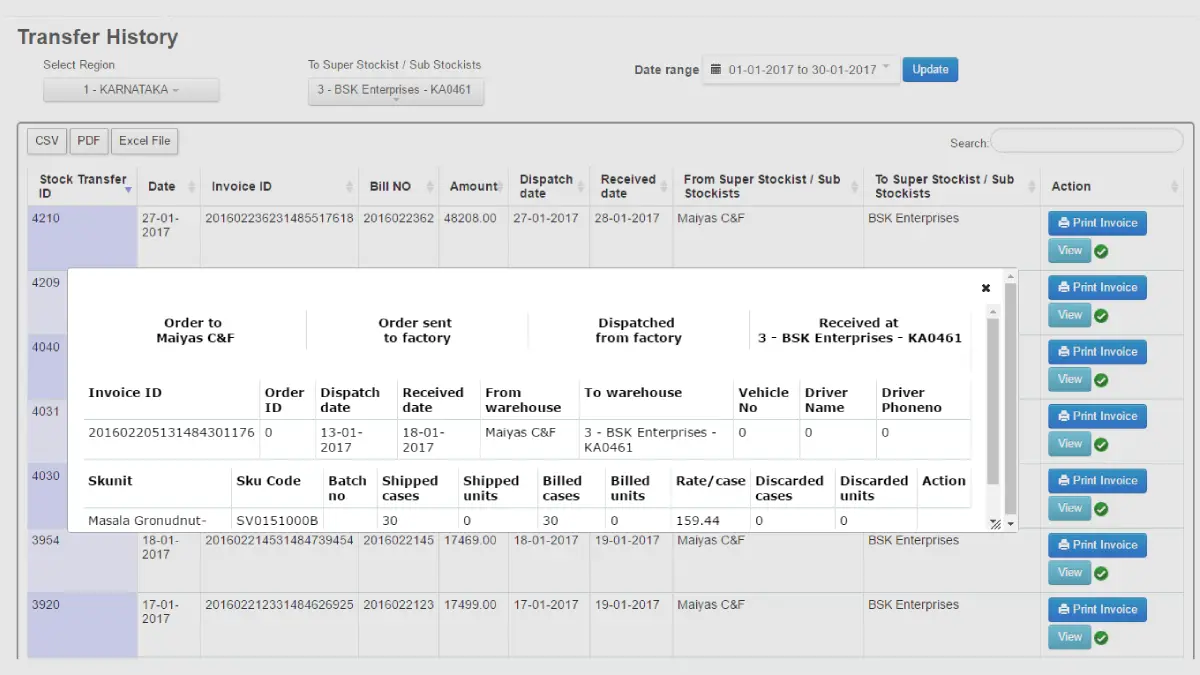
Bizom’s Distribution Management System (DMS) enables manufacturers to seamlessly align sales operations across diverse distribution channels, including traditional trade, modern trade, wholesale, direct distribution, van sales, and emerging channels. By bringing all channel data onto a unified platform, businesses gain a single, real-time view of orders, inventory, sales performance, collections, and trade promotions. This eliminates operational silos and ensures consistency across the route-to-market.
With centralized management of pricing, schemes, inventory, and business rules, Bizom ensures that every distributor and sales team executes the same strategy regardless of the channel they serve. This reduces pricing inconsistencies, improves promotion compliance, and enables faster, more accurate order fulfillment while maintaining complete visibility into channel-wise performance.
Powered by AI-driven insights and analytics, Bizom helps businesses identify growth opportunities, optimise inventory allocation, and make informed decisions for each distribution channel. The result is a synchronised sales ecosystem that improves operational efficiency, strengthens distributor collaboration, and drives profitable growth across the entire distribution network.
Join Our Newsletter
FAQs
01. What are the 4 channels of distribution?
Direct Channel (manufacturer to consumer), One-Level Channel (manufacturer to retailer to consumer), Two-Level Channel (manufacturer to wholesaler to retailer to consumer), and Three-Level Channel (manufacturer to agent to wholesaler to retailer to consumer).
02. What are indirect distribution channels?
An indirect distribution channel is a method in which a company uses intermediaries to deliver its products or services to customers. These intermediaries, known generally as partners, could be wholesalers, distributors, resellers, or dealers.
03. Why is an effective distribution strategy important?
A strong distribution strategy ensures products are available where and when customers need them. It helps improve operational efficiency, reduce stockouts, optimize inventory, increase sales, and enhance customer satisfaction.
04. Can a business use more than one distribution channel?
Yes. Many businesses adopt a multi-channel or dual distribution strategy by selling through company websites, distributors, retailers, and online marketplaces to reach different customer segments.