
What Is a Distribution and Consumer Management System? Benefits, Components & Business Impact
by Ganesh Aradhya
August 14, 2026 | 6 min read
Share:
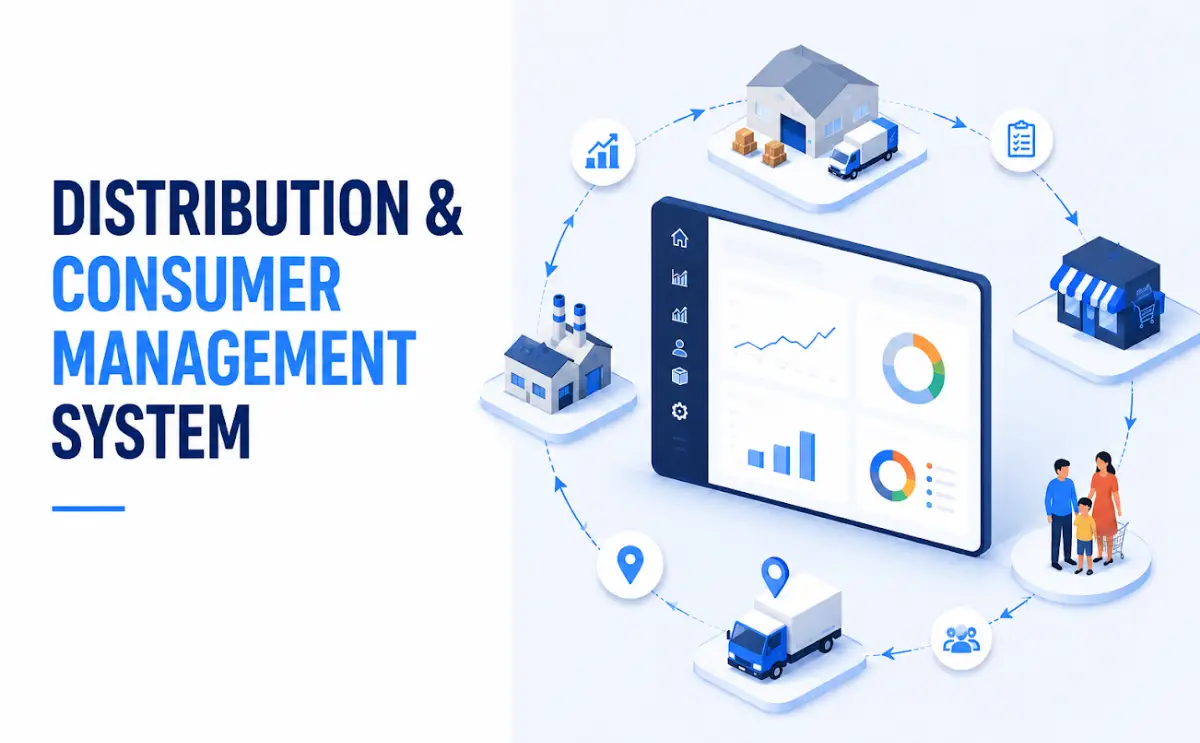
A strong product alone is no longer enough to win in today’s competitive retail market. Businesses need complete visibility across their distribution network while building meaningful relationships with consumers. A Distribution and Consumer Management System brings these two functions together, helping brands streamline operations, improve customer experiences, and make faster, data-driven decisions.
What is a Distribution and Consumer Management System?
A Distribution and Consumer Management System (DCMS) is a platform that helps businesses manage the movement of products from manufacturers to consumers while capturing valuable consumer insights. By combining distribution operations with consumer engagement, a DCMS improves product availability, streamlines the distribution channel, and provides real-time visibility across manufacturers, distributors, retailers, and sales teams.
Core Components of a Distribution and Consumer Management System
1. Distributor Management
The platform manages distributor onboarding, order processing, inventory visibility, billing, collections, and performance monitoring. Businesses receive complete visibility across every distributor without relying on manual reporting.
2. Sales Force Automation
Sales Force Automation equips field sales representatives with mobile tools to capture retailer orders, record outlet visits, track attendance, execute promotions, monitor competitor activities, and collect valuable market intelligence. By digitising daily field operations and providing real-time updates, businesses improve sales productivity, increase field visibility, and make faster, data-driven decisions.
3. Inventory Management
Inventory Management provides real-time visibility into stock levels across warehouses and distribution points, helping businesses prevent stock-outs, reduce excess inventory, improve warehouse planning, and maintain the right inventory balance across locations. With accurate inventory data, businesses optimise the distribution channel process, fulfil orders faster, and improve overall supply chain efficiency.
4. Order Management
Order Management streamlines the flow of orders from retailers to distributors and warehouses through automated workflows. By reducing manual errors, processing delays, duplicate entries, and order cancellations, businesses improve order accuracy, accelerate fulfilment, and ensure products reach customers faster.
5. Consumer Relationship Management
Consumer Relationship Management helps businesses build stronger customer relationships by centralising consumer data and interactions. Features such as loyalty programs, consumer feedback collection, digital engagement, purchase history tracking, personalised marketing campaigns, and customer support enable brands to deliver better experiences, increase customer satisfaction, and encourage long-term loyalty.
6. Analytics and Reporting
Analytics and Reporting provide real-time dashboards with visibility into sales performance, distributor productivity, consumer trends, product movement, market penetration, and retail execution. These insights help businesses identify performance gaps, track key metrics, understand market trends, and make faster, data-driven decisions.
7. Route and Delivery Management
Route and Delivery Management helps businesses optimise last-mile operations by planning efficient delivery routes, tracking delivery status in real time, monitoring vehicle utilisation, and reducing transportation costs. This improves delivery efficiency, ensures timely order fulfilment, and enhances service levels across the entire distribution network.

Benefits of a Distribution and Consumer Management System
- Complete Supply Chain Visibility: Businesses gain end-to-end visibility across distributors, warehouses, retailers, and consumers from a single platform.
- Improved Distribution Efficiency: Automation speeds up ordering, inventory management, invoicing, delivery planning, and collections. The result is a faster and more reliable distribution channel process.
- Better Consumer Understanding: A Distribution and Consumer Management System captures consumer purchase history and engagement data, giving businesses deeper insights into customer preferences and buying behaviour.
- Accurate Demand Forecasting: Real-time sales and consumer insights improve forecasting accuracy. Businesses produce the right inventory at the right time while minimising waste.
- Higher Sales Productivity: Sales teams spend less time on administrative work and more time selling. Mobile automation increases outlet coverage and improves execution quality.
- Faster Decision Making: Real-time dashboards eliminate delays associated with manual reporting. Managers identify market opportunities and operational issues much faster.
- Stronger Distribution Network Management: A DCMS improves Distribution network management by connecting manufacturers, distributors, warehouses, sales teams, retailers, and consumers on one platform.
Why Your Business Needs a Distribution and Consumer Management System
1. Build Stronger Distributor Relationships
Distributors play a critical role in ensuring products reach retailers efficiently, making strong partnerships essential for business success. A Distribution and Consumer Management System (DCMS) provides real-time visibility into inventory, orders, deliveries, and distributor performance, enabling seamless communication between manufacturers and channel partners. With accurate data and automated workflows, businesses reduce delays, resolve issues faster, improve distributor engagement, and build long-term, productive relationships across the distribution network.
2. Improve Retailer Service Levels
Retailers depend on timely deliveries and consistent product availability to meet consumer demand. A DCMS streamlines order processing, inventory management, and delivery scheduling, ensuring retailers receive the right products at the right time. By reducing stock-outs, order errors, and delivery delays, businesses improve retailer satisfaction, strengthen channel relationships, and create a more reliable shopping experience for end consumers.
3. Understand Consumer Preferences
Consumer expectations continue to evolve, making data-driven decision-making essential for business growth. A DCMS captures valuable consumer data such as purchase history, feedback, loyalty program participation, and engagement across different channels. These insights help businesses understand buying patterns, identify emerging trends, personalise marketing campaigns, improve product offerings, and build stronger customer loyalty through more relevant consumer experiences.
4. Increase Operational Efficiency
Managing distribution and consumer operations manually often results in delays, errors, and duplicated work. A DCMS automates critical business functions such as order management, inventory tracking, sales reporting, distributor management, and field sales activities. Automation reduces administrative effort, improves workflow efficiency, enhances collaboration across teams, and enables employees to focus on strategic business activities instead of repetitive manual tasks.
5. Reduce Inventory Costs
Maintaining the right inventory levels is essential for balancing customer demand with operational costs. A DCMS provides real-time visibility into stock availability across warehouses, distributors, and retail locations, helping businesses make informed inventory decisions. Better demand forecasting and inventory planning reduce excess stock, minimise stock-outs, lower storage costs, and improve overall inventory utilisation throughout the supply chain.
6. Improve Order Accuracy
Accurate order processing is critical for maintaining customer satisfaction and operational efficiency. A DCMS automates the complete order lifecycle, from order capture to fulfilment, reducing manual data entry, duplicate records, and processing errors. Faster and more accurate order execution minimises returns, improves delivery performance, and creates a smoother experience for distributors, retailers, and consumers.
7. Support Faster Business Growth
As businesses expand into new markets, they need systems that provide complete visibility and support informed decision-making. A DCMS centralises operational and consumer data, giving businesses access to real-time dashboards, performance reports, and market insights. These insights help identify growth opportunities, respond quickly to changing consumer demand, optimise sales strategies, and support sustainable expansion across regions and distribution channels.
8. Scale Operations with Confidence
Business growth often brings increased operational complexity, including larger distributor networks, more retail outlets, and expanding product portfolios. A DCMS provides a centralised platform for managing these growing operations while maintaining consistency across processes. With standardised workflows, automated processes, and real-time visibility, businesses scale efficiently without compromising productivity, service quality, or customer satisfaction.
How Bizom helps Improve Consumer and Distributor Relationship
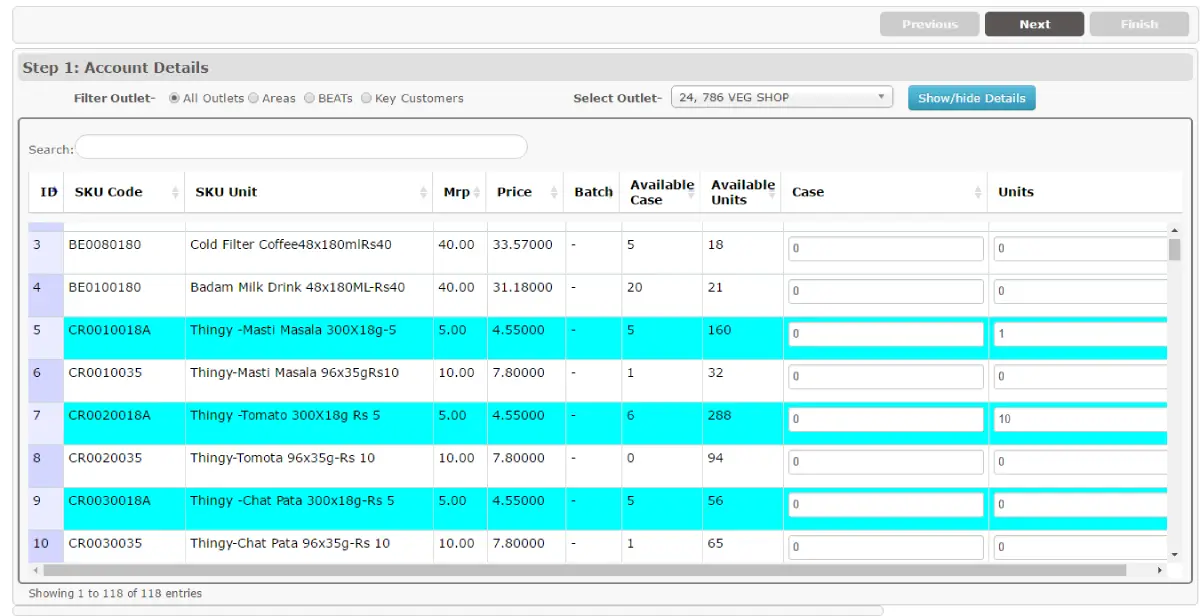
An integrated platform like Bizom brings Sales Force Automation (SFA), Distribution Management System (DMS), and a retailer-facing application together as a natively integrated ecosystem, connecting sales teams, distributors, and retailers across the entire distribution journey.
SFA enables field teams to manage outlet visits, capture orders, execute promotions, and monitor market activities, while DMS manages distributor-side processes such as order processing, inventory, fulfilment, invoicing, collections, and primary ordering. The retailer-facing application extends this connected experience by enabling retailers to place orders digitally, access products, pricing, schemes, and manage their interactions with the brand.
Because these systems are natively integrated, information and transactions can flow seamlessly from field sales to distributor fulfilment and retailer engagement, whether an order is captured by a sales representative or placed directly by a retailer. This reduces fragmented processes, improves order and inventory visibility, enables faster fulfilment, and creates a more responsive experience for channel partners.
By connecting SFA, Distribution Management System, and retailer engagement on one platform, Bizom helps businesses strengthen consumer, distributor and retailer relationships, improve operational efficiency, and turn real-time data across the distribution network into actionable insights for faster, smarter decisions..
See How Bizom Helps You Build a Smarter Distribution Network
Join Our Newsletter
FAQs
01. Can a Distribution and Consumer Management System integrate with existing business software?
Yes. Most modern DCMS platforms integrate with ERP, CRM, accounting, HRMS, and business intelligence tools. These integrations eliminate data silos and provide a unified view of business operations.
02. Is a Distribution and Consumer Management System suitable for small and medium-sized businesses?
Yes. A DCMS is designed to support businesses of different sizes. Small and medium-sized businesses gain better control over distribution operations, while the platform scales as the business expands.
03. How does a DCMS improve decision-making?
A DCMS consolidates operational and consumer data into centralised dashboards and reports. This gives managers access to accurate, real-time insights, helping them respond quickly to market changes and make informed business decisions.
04. Which industries benefit the most from a Distribution and Consumer Management System?
A DCMS is widely used across industries with extensive distribution networks, including FMCG, food and beverages, dairy, personal care, consumer electronics, pharmaceuticals, home care, and consumer durables.