From Realtime Visibility to Realtime Actionability
by Aftab Sheikh
August 27, 2026 | 03 min read
Share:
Ask a Route-to-Market leader in Nairobi what they need most right now, and the answer has quietly changed. It used to be more data. Today it is more decisions, made faster, closer to where the problem actually is.
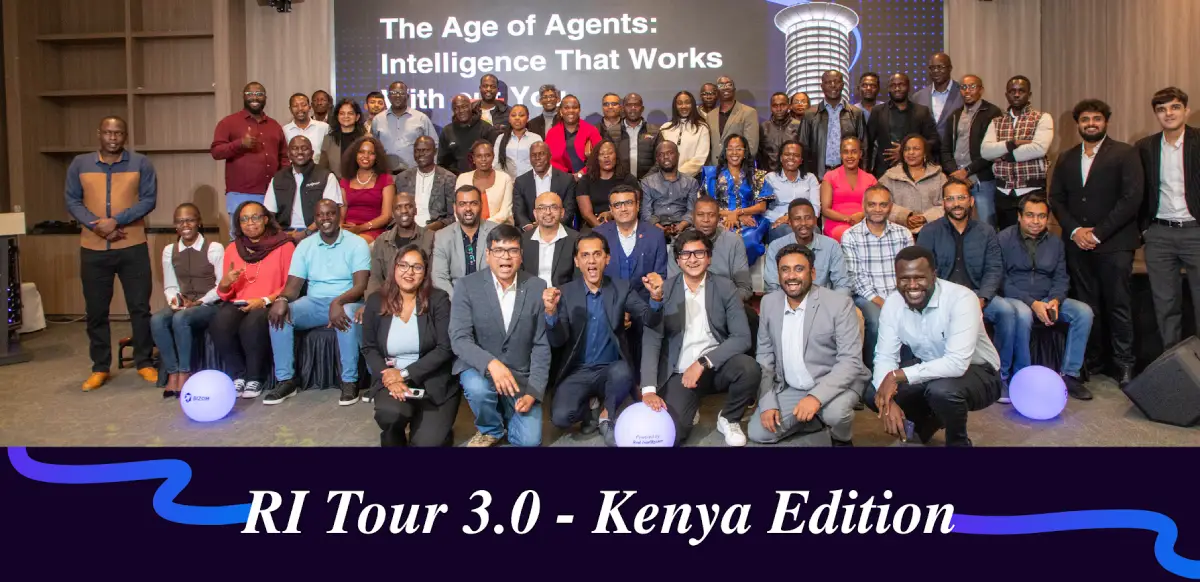
RI Tour Season 3.0 landed in Kenya at exactly that inflection point, and the conversations that followed made one thing clear: the industry has stopped debating whether AI belongs in distribution and execution. It has moved on to a harder question. What do you do the moment you can finally see what’s happening in the market?
From Watching to Acting
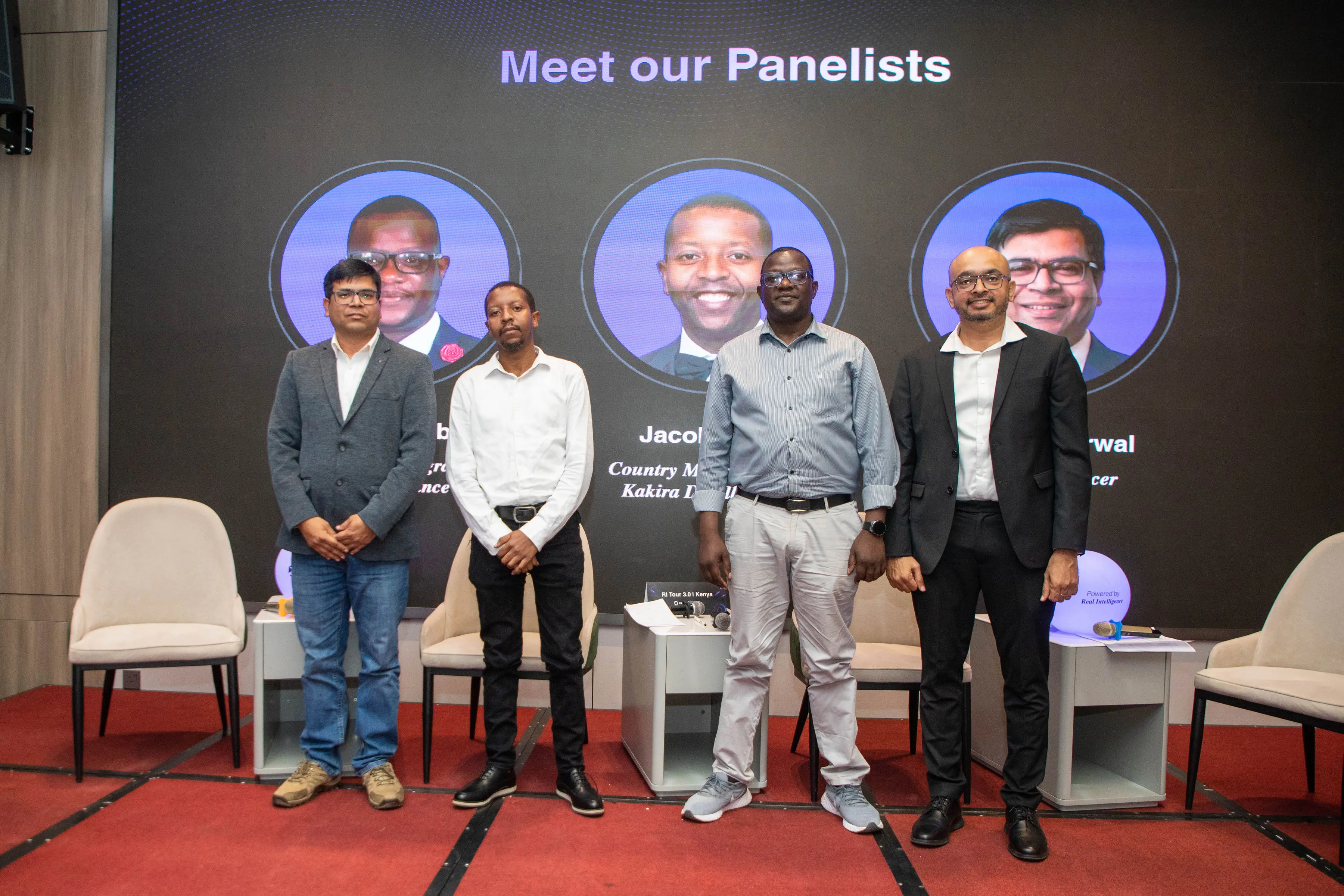
The RI Tour 3.0 | Kenya panel brought together three perspectives that, together, map the full journey from data to decision.
Leonard Kambona: Regional Programme Lead & AI Governance Advisor opened the conversation from a different altitude than most industry panels do. His focus was on trust: how AI systems are governed, how consumer protection and digital sovereignty are preserved as adoption accelerates, and why responsible AI adoption cannot be treated as an afterthought.
Jacob Kabao: Country Manager Kenya at Kakira Distilleries, brought the discussion back to commercial reality. For him, AI is only meaningful if it improves the numbers that actually run a business: P&L, execution across General Trade, Modern Trade and Horeca, distributor performance, and demand planning accuracy.
Rohit Agarwal: Chief AI Officer at Bizom, connected the two. His argument centered on reliability in the real world, not the lab. Field data is messy. Inputs are imperfect, incomplete, sometimes contradictory. The systems that matter are the ones that can work with that imperfection anyway, using computer vision and agentic capabilities to move from producing analysis to actually helping teams act on it.
Put together, the panel described a single arc: govern it responsibly, measure it against real commercial outcomes, and build it to work with the world as it actually is, not as a dashboard would prefer it to be. That arc is exactly what the market itself is now demanding.
Voice of Kenya
If the panel described where the industry is heading, the Voice of Kenya findings describe where it actually stands today. Treat it as more than a survey. It is what Kenya’s Route-to-Market ecosystem is telling the industry about its readiness, its frustrations, and what it expects next.
To start with readiness. 96% respondents call AI a competitive necessity, not an experiment. 83% say they are ready to adopt AI-powered sales tools today. Sentiment toward the tools already in use is strongly positive, with an NPS of +48. That combination, high urgency and high readiness, is unusual. It means the conversation in boardrooms has already shifted from “should we” to “how fast can we.”
Here is the contradiction the data exposes. Kenyan organisations rate their current market visibility at 2.7 out of 5. Leaders say they need at least 4.5 out of 5 to hit their growth targets. That is not a small optimisation problem, it is a structural gap of 34% between where visibility sits and where it needs to be for growth plans to actually work.
The consequences show up in the field every day. 57% of respondents point to stockouts and product availability as their single biggest execution challenge, and 26% of outlets are currently facing stockouts at any given time.
Meanwhile, 30% name real-time visibility itself as a top execution priority. Digital tools are not absent, SFA penetration averages 57%, but adoption is uneven, and the systems in place are not translating into the real-time picture teams actually need. Perhaps the most telling number is this: field teams spend roughly 19 hours a week on manual reporting. Almost half a working week, spent producing information rather than acting on it.
Kenya is not waiting to be convinced about AI. The market is already asking what AI can do once the right visibility exists. And this is where the panel’s arc becomes concrete. Seeing a stockout is visibility. Automatically triggering a replenishment intervention is actionability. Identifying an execution gap in a territory is visibility. Assigning the right corrective action to the right person is actionability. Observing that a distributor is underperforming is visibility. Enabling a specific, timely correction is actionability.
This is the design principle behind how capabilities like Bizom RI Agents, RI Copilot, Bizom Marshal, the Telecalling Agent, and DMS work together. None of them are impressive in isolation. What makes them matter is that they shorten the distance between seeing something and doing something about it, which is exactly what the Voice of Kenya data says the market is asking for.
The Organisations Pushing the Frontier
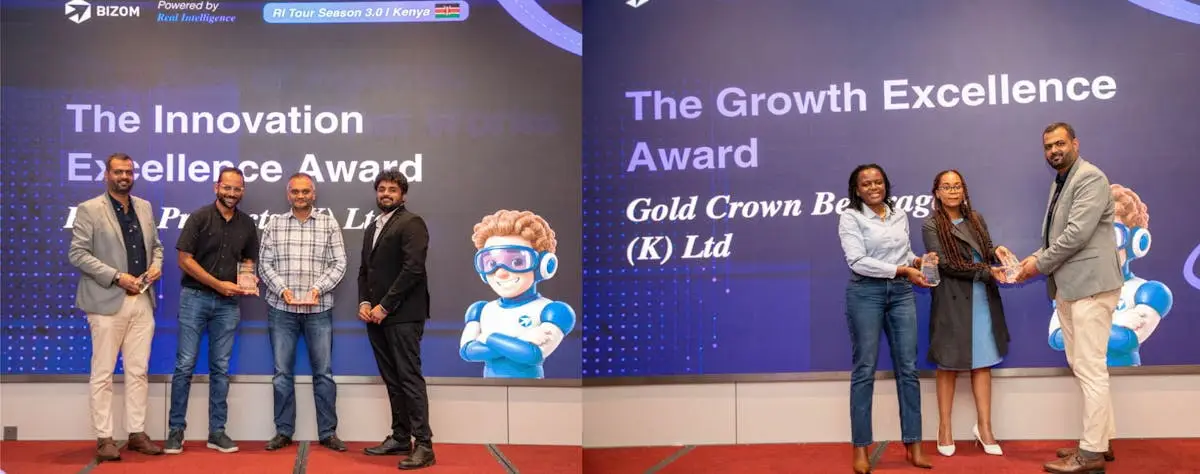
Two Kenyan organizations were recognized at the RI Tour for putting this thinking into practice.
The Growth Excellence Award went to Gold Crown Beverages (K) Ltd, recognised for sustained pan-Africa growth built on operational discipline rather than luck. The team behind that growth, Mercy Kavindu, Commercial Control & RTM Manager, Fides Mugambi, Head of Sales, and George Mwasaru, General Manager, represent exactly the kind of execution rigor the Voice of Kenya data says the market needs more of.
The Innovation Excellence Award was presented to Basco Products (K) Limited, recognised for challenging conventional approaches within their category. The award was accepted on behalf of a team that included Mehul Shah, Group Head of Finance, IT & Corporate Affairs, Shailesh Shetty, National Sales Manager, Dilip Rupaliya, Paras V., and Samwel Sakwa.
These are not ceremonial footnotes. They are proof that the visibility-to-action journey is not theoretical. It is already happening inside Kenyan organisations willing to translate ambition into execution, innovation, and growth.
Closing Thoughts
The next phase of Route-to-Market transformation in Kenya, and everywhere else, will not be won by whoever collects the most data. It will be won by whoever shortens the distance between what happens in the market and what the business actually does about it.
Visibility earns its value only when it becomes intelligence. Intelligence earns its value only when it becomes action. And action only matters when it shows up as growth. RI Tour 3.0 | Kenya made the case for that entire chain, from the panel’s perspective on governance and reliability, to the market’s own voice, to the organisations already proving it works.