
2025 exposed Artificial Intelligence.
by Suruchi Sundriyal
Dec 24, 2025 | 03 min read
Share:

Hey there!
I know holiday hats are on and you are going on or are already on the year end trip.
Here’s a holly jolly Christmas rollout so that you can sleighhh on Christmas Eve, without having to worry about your inbox hits.
In 2025, Real Intelligence stopped being a slide and started becoming a daily habit for thousands of people in CPG. Across 13 cities, hundreds of trainings, and over 50,000+ users navigating their everyday decisions through Bizom, one thing became clear: the success or failure of AI in CPG has much less to do with algorithms, and much more to do with how people actually work.
Here are five lessons from the last year that CPG leaders can carry into 2026.
1. AI Fails When It Ignores Field Reality
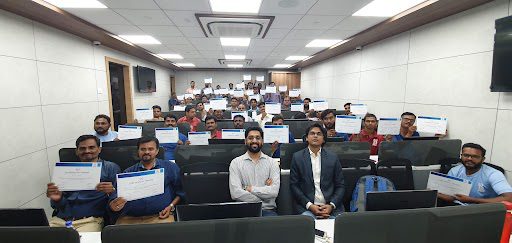
Over the year, Bizom’s teams ran 500+ training sessions and enabled large-scale adoption of RI-assisted workflows across field teams: sales reps, distributor staff, supervisors, and managers. It was a live A/B test of what people will use versus what they will quietly ignore.
The clear winner was anything that removed a decision or a task from a rep’s day: which outlet to prioritise, which SKUs to focus on, how much to book without overloading the van. “Smart” features that added extra clicks or extra reporting simply did not stick, no matter how impressive the tech looked in demos.
Takeaway for CPG leaders: when you evaluate AI initiatives, ask one brutal question: “What decision or task does this remove from my frontline’s plate tomorrow?” If the answer is fuzzy, adoption will be too.
2. A Roadmap Works Better When Customers Write 25% Of It
Through RI workshops across 13 cities, CPG leaders repeatedly brought up the same pain points: outlet duplication, assortment planning, leakage in the route-to-market, and the struggle to move from reports to recommendations. About a quarter of Bizom’s product roadmap last year was driven directly by these conversations.
The most successful RI agents and features were the ones that came from these workshops, not from internal brainstorming. When a CXO, NSM, or KAM could see their own use case show up months later as a working feature, engagement and usage climbed sharply.
Takeaway: involve your partners’ product teams in real business reviews, not just status calls. The more your problems shape their roadmap, the more relevant their “AI” will be to your P&L.
3. Community Beats Isolated Pilots
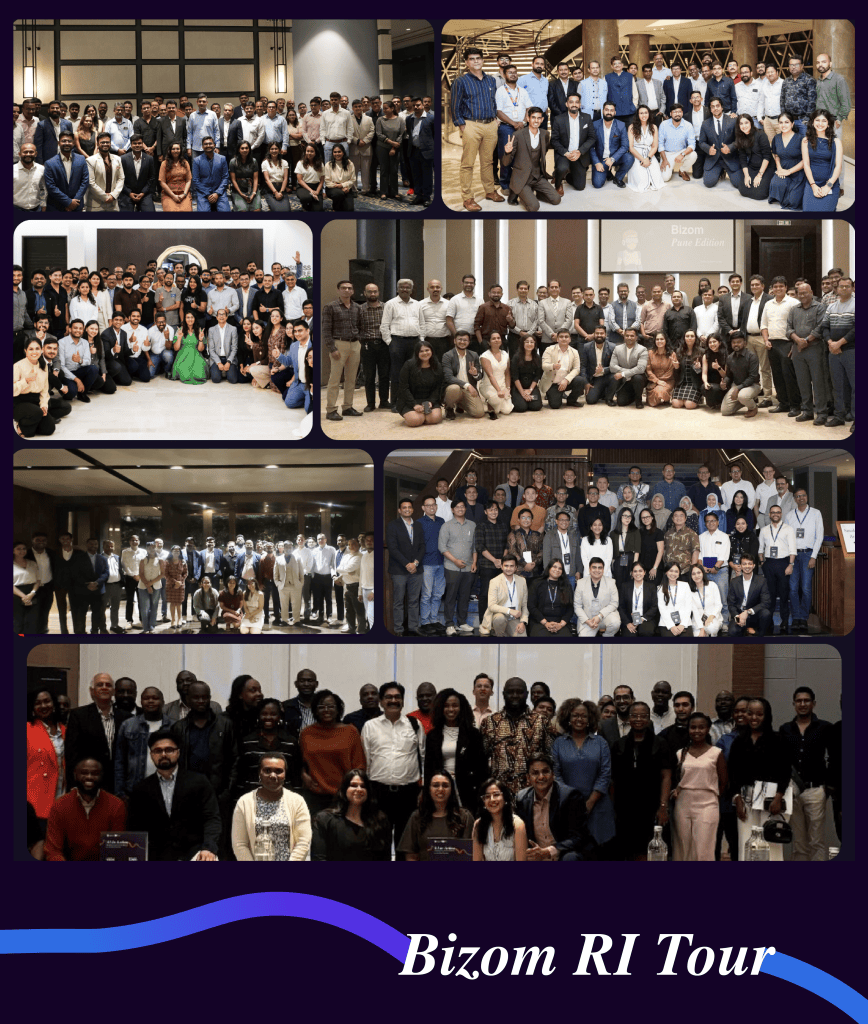
Across marketing initiatives, Bizom engaged over 6,000 CPG leaders through events, roundtables, and community touchpoints. What stood out was how similar the questions were, regardless of category or company size:
- How do we move beyond AI pilots?
- How do we get adoption beyond a champion team?
- How do we justify ROI when data is still messy?
When leaders heard peers openly share wins and failures, resistance dropped. RI went from “yet another initiative” to “something the industry is figuring out together.”
Takeaway: treat AI as a community sport. Peer learning, shared benchmarks, and honest failure stories will accelerate your own programs far more than another internal PoC.
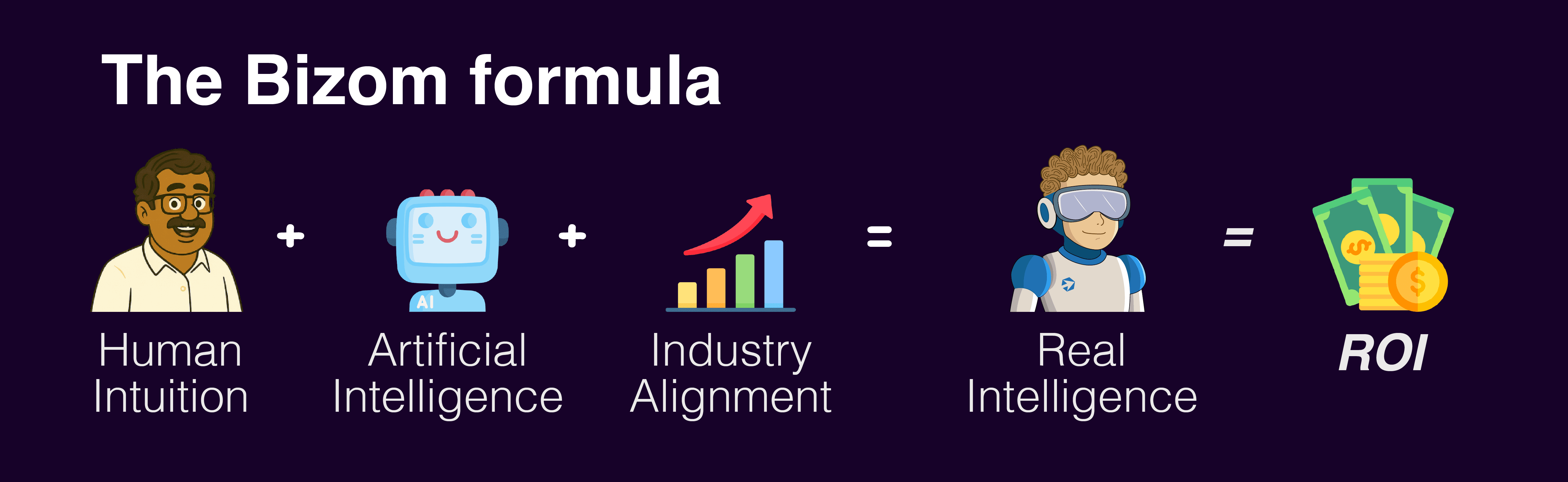
4. Real Intelligence = AI + Domain Knowledge + Human Intuition
A lot of 2025’s hype revolved around generic GenAI: calling an API, generating text, or wrapping models in shiny interfaces. What separated Real Intelligence from “just AI” was alignment with CPG fundamentals: clean catalogues, outlet hierarchies, pack–price logic, beat plans, and the unwritten rules that sales teams live by.
Behind the scenes, Bizom’s engineering and data science teams pushed more customer workflows into RI-assisted mode, but always with domain guardrails. Algorithms were tuned to business realities, not the other way around. Human intuition still mattered: sales leaders and category managers validated, tweaked, and sometimes overruled what the machine suggested.
Takeaway: if your AI vendor cannot speak fluently about CPG basics and on-ground constraints, you are likely funding an experimentation, not Real Intelligence. The winning formula is AI + industry alignment + human judgment, in that order.
5. Adoption Is The Real KPI
The headline number from the year is simple: over 25,000 users adopted new RI experiences and features, and user sentiment around these flows held at a healthy level. That matters more than any internal metric about models or infrastructure.
Every adopted workflow represents a micro-shift: one rep trusting a suggestion, one manager acting on an alert, one planner using an RI view instead of a spreadsheet. At scale, those micro-shifts compound into better coverage, sharper execution, and faster time-to-value on every technology rupee you spend.
Takeaway: in 2026, measure your AI initiatives not by number of pilots or models, but by number of workflows where people would miss the AI if you turned it off.
If there is one message from 2025, it’s this: Real Intelligence is no longer about who has the fanciest algorithm. It’s about who can weave AI into the daily lives of thousands of people across the CPG value chain.
Bizom’s numbers this year are simply proof points from that journey. The real story is what they say about where CPG is headed – and how quickly leaders who get RI right will pull ahead.