
Building Legendary Brands: A Tale of Delivering Value, Aspirations, and Adaptability
by Nidhi Agrawal
Dec 11, 2025 | 05 min read
Share:
Bizom commemorates one of the most influential women leaders in the consumer goods space, Simone Tata.
Her work shaped two of India’s most iconic brands and set the foundation for how purpose-driven companies can serve a rising nation. Her journey shows how consumer insight, cultural understanding, and bold conviction can build brands that endure. What follows is a reflection on her principles and the extraordinary legacy she leaves behind.
The Birth of Lakmé
In the early years after Independence, India was rebuilding itself and the government was working hard to reduce dependency on imports. At that time foreign cosmetics were a major drain on foreign exchange, yet Indian women had very few home-grown choices. This gap created a clear need. India needed its own beauty brand, one that understood local tastes and skin tones, one that felt modern yet rooted in the culture.
This was the moment when Lakmé began its journey. It was created with a clear purpose: to offer Indian women good quality beauty products at home and to reduce reliance on foreign goods.

The Arrival of Simone Tata
Born in Geneva in 1930 and educated at Geneva University, Simone came to India as a tourist in 1953. She married into the Tata family two years later, and by the early 1960s, accepted a board position at Lakmé. At that point the business was small and cosmetics still bore social stigma in India.
Simone Tata understood that a brand is more than products on a shelf. It is about identity, culture, aspiration and inclusion. She believed that “beauty should never be a luxury reserved for a few, but a necessity every Indian woman deserves.”
Cosmetics in 1960s India were not commonplace. Many considered lipstick, nail polish, or even modest makeup a taboo. Simone grasped the cultural challenge. She resolved to shift perceptions; not by rebelling but by gently redefining beauty norms. Her strategy combined empathy, subtlety, and courage.
One of her early bold moves ensured that Lakmé’s products were tailored to Indian skin tones and preferences. She did not merely copy Western trends. Instead, she translated global styles into something Indian women could identify with. This localisation made cosmetics feel familiar rather than foreign.
Simone also believed in the power of brand presence. In the early 1960s and 1970s, when beauty advertising was rare, she supported Lakmé’s participation in fashion shows and early efforts to build visibility. She understood that to normalise beauty products, the brand had to be more than a product. It had to be visible, aspirational, and trust-worthy.
Under her leadership, Lakmé carefully balanced aspiration and accessibility. The brand launched advertising campaigns that challenged stereotypes with subtlety rather than shock. For instance, one well-known commercial from the early 1980s featured a model playing classical Indian instruments while wearing Lakmé makeup sends a clear message: beauty and Indian identity can coexist.

By 1982 she became chairperson of Lakmé. Over the next two decades, her vision turned Lakmé into a household name. Cosmetics moved from being a foreign indulgence to being an accessible symbol of confidence, self-expression and modernity for Indian women.
Creating Trent and Shaping Modern Retail
The 1990s brought new challenges. India’s economy opened up, global competitors entered, and consumer tastes began shifting faster. Simone Tata saw that the future lay beyond cosmetics but only if the Tata group could adapt.
In 1996, she initiated a joint venture between Lakmé and Hindustan Unilever (HUL), to combine Lakmé’s local expertise with HUL’s global reach in manufacturing, distribution, and marketing. This move was a strategic step to secure scale and sustainability in a competitive market.
When Tatas sold their stake a couple years later (in 1998), Simone Tata transformed that exit into a fresh beginning. She used the proceeds to acquire a retail business (Littlewoods India) and merge it with Lakmé’s export arm, creating a new entity Trent Limited.
Trent then launched Westside ushering in a new era of organised fashion and department-store retail in India. Under her non-executive chairmanship until 2006, Simone laid the foundation for what would become one of India’s most respected retail platforms.
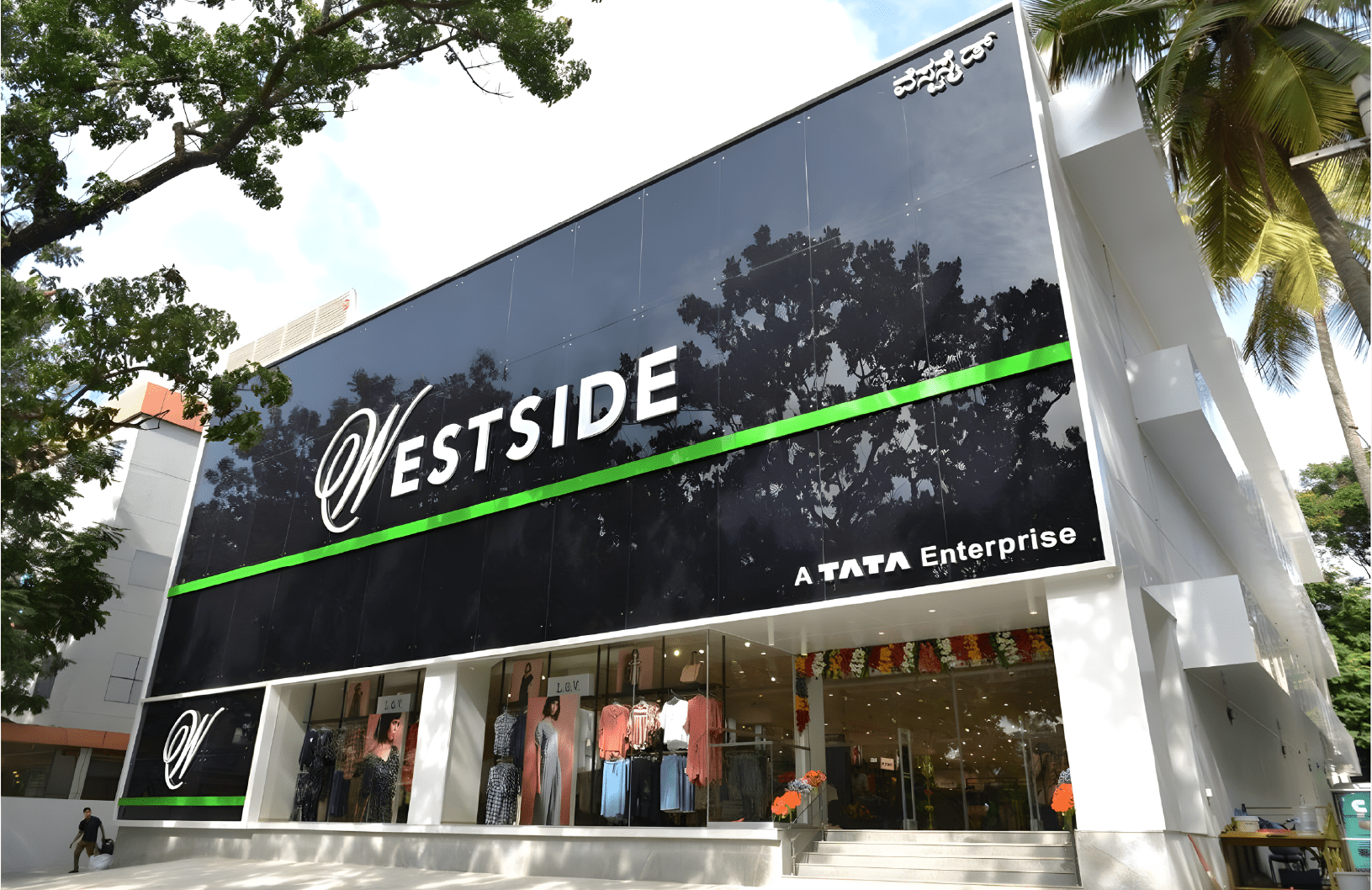
Thus, from beauty to lifestyle retail, Simone used every shift—product, market, social norms—to adapt while staying true to a core idea: delivering value and aspiration to Indian consumers.
Lessons on Building Remarkable Brands
We can distill many important lessons from Simone Tata’s journey and the stories of Lakmé and Trent.
- Start with purpose: Lakmé was not born merely out of a business opportunity. It was rooted in a clear social and economic need of reducing import dependence, making beauty accessible, and building national self-reliance. That sense of purpose helped the brand stay grounded even as it grew.
- Understand your consumer deeply: Simone Tata did not force foreign beauty ideals. She understood that Indian consumers, women with Indian skin tones, living in Indian societies, needed products tailored to their needs and sensitivities.
Success came when Lakmé designed cosmetics and messaging that resonated with Indian women’s aspirations and cultural sensibilities. - Build identity and be visible: Lakmé’s success was not driven just by good creams or lipsticks, but by identity: confidence, modern-Indian self-expression, aspirational living. Through ads, outreach, and consistent positioning, the brand became more than a utility. It became a statement. Lakmé built a story, an identity, a feeling. Products were just the entry point.
- Balance aspiration with accessibility: Lakmé was aspirational: it promised beauty, modernity, elegance. But it also needed to be accessible both in price and social acceptance. Simone Tata walked that balance carefully. It did not leave aspiration only to elites. It reached for the larger middle-class, the everyday consumer.
- Innovate and experiment: Lakmé introduced 5-10 new ideas a year in its early days, which was remarkable for that time. The brand taught us to innovate, experiment, and learn quickly, because no one can ever predict with certainty what will resonate with consumers. Today Lakmé delivers at least 30-50 innovations or renovations every year, showing how this spirit of constant evolution continues to drive its success.
- Be ready to evolve and pivot: When market conditions changed, Simone Tata did not cling rigidly to the old model. She formed a global partnership, and later pivoted the business altogether transforming a cosmetics brand into an apparel retail platform (Trent/Westside).
- Use brand strength to launch new ventures: When Lakmé had reach, trust, and cultural currency, Simone repurposed that strength to build Trent. She did not treat Lakmé as a one-off. She saw it as a platform, a foundation.
A Legacy That Endures
Simone Tata’s journey transformed not just brands, but mindsets. Cosmetics became socially accepted. Beauty became accessible. Retail became organised. Through Lakmé and later Trent Limited, she helped build the foundations of India’s modern beauty and lifestyle economy.
Lakmé today continues to thrive under new ownership carrying forward the legacy of making beauty Indian. Trent, Westside, Zudio and other brands under the retail group are part of the ecosystem she helped build.
Her story offers powerful inspiration: building a remarkable brand is not just about market share or profits. It is about purpose, empathy, authenticity, and readiness to evolve.
For entrepreneurs and marketers today, especially those working in emerging markets, her example shows that local insights, cultural sensitivity, and long-term thinking often matter far more than short-term glamour or global mimicry.
As Bizom celebrates Simone Tata’s legacy, we recognise the deep alignment between her philosophy and our own mission. We believe brands grow when they stay close to their customers and trade partners. Bizom enables this with local intelligence, real time trade channel insights, and tools that deliver operational efficiency at scale. Our goal is to help every brand lead with clarity, adapt with speed, and build the kind of trust that stands the test of time.